Posts mit dem Label Stagnation werden angezeigt. Alle Posts anzeigen

Sonntag, 24. Mai 2026

Selbstverstärkende Inkompetenz

Die Gesellschaft versteinert in Prozessen, die alles immer kleinteiliger regeln und dann an jeder Stelle im Prozess maximale Inkompetenz und Handlungsunfähigkeit etabliert. 

Beispiel aus dem Alltag. 

Eine Filiale einer Bäckerei bietet Rührei mit Schinken und Spiegelei (ohne) an. Frage, ob man Spiegeleier mit Schinken machen könnte, führt zu Konferenz überforderter Mitarbeiter bei gleichzeitiger Unterbrechung aller laufenden Prozesse. 

Der Urteilsspruch fällt, nein, das wäre nicht möglich, ist in der digitalen Kasse nicht vorgesehen. 

(1) Prozesse sind bis auf die Form des verarbeiteten Eis spezifiziert, damit diese Rolle auch von dem am wenigsten geschulten Mitarbeiter umgesetzt werden kann

(2) Die Erwartungshaltung der Unternehmensführung (ebenso Prozess-kleinteilig gestaltet, mit maximaler Diffusion jeder Verantwortung und Bürokratie), dass die Mitarbeiter nicht in der Lage sind einen klaren oder praktischen Gedanken zu fällen, selbstbestätig sich dann in der Praxis. Denn niemand kommt auf die Idee, die Rühreier in der Kasse zu verrechnen die Eier bei der Zubereitung aber nicht zu verrühren.

Die Erwartung der totalen Inkompetenz der Mitarbeiter führt zu einem strukturellen Korsett, dass die strukturelle und totale Inkompetenz der Mitarbeiter erst hervorruft.

Wer Erwachsene wie Kinder behandelt, darf sich nicht wundern, wenn sie sich irgendwann wir Kinder benehmen.

Donnerstag, 8. August 2024

Thinking Time

A nature article suggests: 

“Scientists need more time to think”. 

No shit, Sherlock. So obvious, so correct. But not only scientists, though. Performance in most teams (e.g., programming) is abysmal due to distraction.  

“More digital devices equals less time to concentrate and to think.”

Most managers, I encounter, are concerned about the fact that their teams are not performing. When you look at their teams, you find out that this isn't just capitalist talk. The output of most programming teams, for instance, is abysmal. But then the same managers would rather not take any serious measures to improve this performance. The reason is distraction, and they either don't want to believe it or don't want to do anything to fix it. Partly because it is their fault as well. 

Who enters the office multiple times a day and changes direction? Who installed the company messenger that claims to improve communication and performance (when in fact it does the exact opposite)? Who did not manage to isolate teams from customers and all other stakeholders? 

The Nature article suggests that the problem is, that  “thinking time […] is rarely, if ever, quantified in employment practices.” This shows in what madhouse we live. To think that quantifying thinking time would improve the situation shows that we lost our marbles in box ticking activities. Let's put “thinking” into the backlog and assign thinking minutes to every one. Maybe Joe can think from 10:12 to 10:23 and Jane from 14:44 to 15:11.

Naturally, it is imperative that each individual accurately records their thoughts in the time recording, including the precise descriptions of their thoughts. Felicity Mellor from imperial college London is pointing out this nonsensical idea:

“Mellor argues that including yet another box in an evaluation form might not go down well.”

A systemic problem, such as this bureaucratisation, cannot be solved by increasing the bureaucracy, but by removing it.

Sonntag, 14. Januar 2024

Software Destroying Lives — the UK Post Office Scandal — a Solitary Case?

“Hundreds of self-employed workers at the state-owned Post Office were wrongly prosecuted or convicted between 1999 and 2015 for false accounting, theft and fraud because of glitches in a software system that incorrectly showed money missing from accounts.

Some spent time in jail, while others went bankrupt, saw their marriages destroyed, and some died before their names were cleared.”

and: “The Post Office maintained for years that data from the defective Horizon computer accounting system, developed by Japan's Fujitsu and rolled out in 1999, was reliable, while accusing sub-postmasters of theft.”, Reuters

I have been working for a long time on the question of software complexity and quality, or rather, the lack thereof, in most systems under observation. The low quality of software combined with increasing, I want to say, crippling complexity shows increasing bad effects on our society, which is entirely dependent on software. Software is the digital nervous system of our world, and we are suffering from a severe neurological disease in that sense.

Take a look at my YouTube video on software complexity for more context and examples.

Now, what interests me even more than the specifics of this case is: why would this be an isolated case? Because all others produce software so much better? 🤣


Montag, 15. Mai 2023

Wissenschaft — Institutionalisierter Confirmation Bias?

In wesentlichen Bereichen der Forschung gehen heute junge Menschen nicht weil sie besonders talentiert für das jeweilige Feld sind, sondern weil sie Aktivisten sind. Klimaforschung, Ökologie, Soziologie usw. 

Das geht Hand in Hand mit sterbenden Legacy Medien, die versuchen immer enger fokussierte Interessengruppen anzusprechen, die sich zwar teilweise gebildet geben, aber nur ganz wenig Abweichung von der eigenen Ideologie ertragen — ein performatives Spektakel, nicht viel mehr.

Dies führt zu selbstverstärkenden und moralisierenden Mechanismen in der Gesellschaft: man kämpft für die »gute« Sache, und wird in Talkshows und dergleichen eingeladen. Die flachen Medien bringen die narrative Unterfütterung der naivsten Form der Geschichte. Gefragt ist nicht die Erkenntnis, dass es keine einfache »Lösung« gibt, schon gar keine moralisch heroische, sondern vielmehr eine Reihe an Kompromissen, ...

Uriah Heep

Oftmals führt es sogar zu einer solchen Verzerrung der Tatsachen, dass die, die auf der vermeintlich moralisch richtigen Seite stehen, mit ihren Maßnahmen die Welt schlechter machen: Energiewende, Gentechnik, Covid-Response. 

Was aber die Wissenschaft im engeren Sinne betrifft,  trägt dies in keiner Weise dazu bei, ernsthafte Wissenschaft zu fördern und daraus Maßnahmen im kritischen Diskurs mit der Gesellschaft abzuleiten, sondern führt viel mehr zu institutionalisiertem confirmation bias. Dies war immer zu einem gewissen Maße gegeben, siehe Thomas Kuhn, aber es nimmt heute beängstigende Ausmaße an. 

Heute gibt es Wissenschaftsbürokraten, die sich für Vertreter der Wissenschaft halten — verstünden sie allerdings etwas von Wissenschaft, würden sie erkennen, wie absurd alleine diese Idee ist. Denker, die gegen den Strom schwimmen, wie etwa in der Vergangenheit Personen wie Freeman Dyson, werden heute frühzeitig aus dem universitären Betrieb ausgemustert. So haben fast alle dieselbe ideologische Grundstimmung und entsprechend langweilig, fehlerhaft, irrelevant und langsam geht die Forschung voran.

Wissenschaft, die versucht Konflikt zu vermeiden oder gar zu verbannen schafft sich ab. Universitäten, die sich als Safe Spaces wahrnehmen und ideologisch eindimensional werden, fallen in die Irrelevanz.

Die wesentliche Frage für die nächsten Jahre ist, wie weit der universitäre Betrieb noch reformierbar ist, vor allem auch deshalb, weil es im aktuellen System zu viele Gewinner gibt. Gewinner in dem Sinne, dass die mangelhafte Qualität ihnen selbst nicht schadet, weil sie es sich in den selbst-referentiellen Zirkeln gut eingerichtet haben. Woher soll also der Druck zu Reformen kommen? Eine mögliche Antwort wäre: von der Gesellschaft, die langsam aber sicher die Geduld mit fragwürdiger Expertise gepaart mit hohen Kosten verliert. 

Auch von Seiten der Wirtschaft könnte sich der Druck erhöhen, wenn es immer deutlicher wird, dass das Absolvieren einer Universität relativ wenig Wert stiftet — mit Ausnahme einer Erkenntnis: dass die Person in der Lage war sich über mehrere Jahre durch langweilige und weitgehend irrelevante Strukturen zu quälen. Das mag allerdings als Qualifikation für Großunternehmen von Wert sein.

Auf der positiven Seite ergeben sich hier Chancen für Europa, denn die US-Universitäten sind schneller und energischer darin, sich zu beschädigen als die europäischen — das würde schnelles Handeln notwendig machen...

Mittwoch, 12. April 2023

The Death of the Eccentric (and Relevant) Professor (and what ChatGPT will do)

 “The eccentric university professor is a species that is going to be extinct fast. […] The bad currency is driving out the good and in effect where the people who are nimble in the art of writing for grants are displacing the idiosyncratic thinkers who are generally much less nimble at that sort of activity.”

Peter Thiel (in discussion with David Graeber) spot on in 2014. Exactly that happened. 

But now consider, what ChatGPT etc. will do? The bad currency now gets amplification by “artificial intelligence”. And I think the best description for ChatGPT might in fact would be: mediocrity amplifier (similar like its data-foundation Wikipedia).

Sounds like what happened in banking and investment in the last decades and worked perfectly well as we all know (2008, 2022, ...).


Mittwoch, 29. März 2023

Expertise oder Wissen?

Die übliche oder alltägliche Verwendung der Begriff »Expertise« beziehungsweise »Experte« irritiert mich schon seit längerem. Ständig werden uns Experten in Medien präsentiert, die die Welt erklären und Prognosen komplexer Systeme mit großem Selbstvertrauen darlegen.

Nun ist es hinreichend untersucht, dass solche Expertenprognosen in der Praxis sehr wenig wert sind, und in der Regel kaum über Zufallstreffer hinausgehen. Empfehlenswert dazu sind die Untersuchungen von Philip Tetlock.

Dieses Photo habe ich vor einigen Jahren im Iran gemacht. Dieser Mann sitzt seit Kindesalter an diesem Webstuhl und produziert Teppiche von enormer Komplexität und dies ohne Vorlage. Dies ist vielleicht ein Paradebeispiel für Expertise.

Wir haben, so scheint mir, im Kern ein begriffliches Problem. »Experte« oder »Expertise« leitet sich vom lateinischen »expertus« ab, was etwa erfahren oder erprobt bedeutet. Es gibt hier also einen klaren Bezug zu praktischer Kompetenz. Daraus folgt für mich folgende Definition:

Expertise ist die Fähigkeit, Veränderungen in der Welt konsistent vorauszusagen oder herbeizuführen.

Um das an einigen Beispielen zu illustrieren:

  • Ein Installateur zeigt Expertise, wenn er den Austausch einer Toilette weitgehend korrekt plant und umsetzt
  • Ein Automechaniker ist kompetent, wenn er einen Schaden korrekt diagnostiziert und behebt
  • Ein Chirurg ist kompetent, wenn er in der Lage ist, bestimmte Erkrankungen weitgehend korrekt zu diagnostizieren und entsprechend des aktuellen Wissenstandes zu behandeln, z.B. Knochenbruch, Trauma
  • Ein Progammierer kann hohe Expertise in einer bestimmten Domaine haben, z.B. der Programmierung von Datenbanktransaktionen. Daraus folgt keine Expertise über die Nutzung dieser Komponente in großen und komplexen Softwaresystemen.

In den genannten Bereichen, und natürlich zahlreichen anderen, ist Expertise möglich, und Menschen können in diesem Sinne kompetent oder inkompetent sein. 

Es gibt aber auch Domänen/Problemstellungen und Systeme, wo wir (erhebliches) Wissen aber keine oder wenig Expertise (nach obiger Definition) haben. Beispiele dafür sind:

  • (Makro)ökonomie: Wir wissen vieles über inflationäre Ereignisse der letzten 100 Jahre, daraus folgt keine konkrete Expertise für die aktuelle Situation
  • Klimawandel: wir wissen relativ viel über klimatische Entwicklungen der Vergangenheit, daraus leitet sich kaum Expertise über die Klimaentwicklung der nächsten Jahrhunderte ab, im Besonderen nicht in einem System, das mit menschlichem Handeln in stetiger Wechselwirkung steht
  • Wir können vieles über Viren und vergangene Pandemien wissen, das gibt uns noch keine Expertise über eine neue Pandemie

In diesen und ähnlichen Feldern gibt es aus prinzipiellen Gründen keine Expertise und daher auch keine Kompetenz im Sinne, wie bei Expertise-Feldern. Diese Unterscheidung zwischen Wissen und Expertise ist in der Praxis von höchster Relevanz. Um einige ausgewählte Aspekte herauszugreifen: 

  1. Es gibt Bereiche wo es tatsächlich Expertise gibt. Diese ist messbar und Kompetenz ist von Inkompetenz in klaren Kriterien unterscheidbar.
  2. Es gibt Bereiche, komplexe Situationen, wicked problems, in denen es keine Expertise in diesem Sinne geben kann, aber sehr wohl Wissen, das für Entscheidungsfindung relevant ist.
  3. Jemand der sein Leben an der Universität verbringt, hat im besten Falle Wissen, aber selten Expertise, selbst in den Bereichen, in denen man Expertise haben kann. Expertise kann daher nicht an Universitäten aufgebaut, sondern im besten Fall begründet werden.
  4. Die großen Herausforderungen der Zeit sind zumeist solche, wo es möglicherweise (viel) Wissen aber gerade keine nennenswerte Expertise gibt (z.B. Pandemien, Ökonomie, globale Energiesysteme, Umwelt, Klima)
  5. In Bereichen, in denen Expertise möglich ist (z.B. dem Bau von Infrastruktur), sollte man dieses praktische Wissen auf hohem Niveau erhalten und nicht durch übertriebene (und in der Regel wenig kompetente) Bürokratie behindern. Das Erhalten und Weitergeben von Expetise ist nur durch ständiges Tun und Ausbildung in der Praxis möglich.

Herausforderungen sind folglich sehr unterschiedlich zu behandeln, je nachdem ob es sich um solche handelt, wo es im engeren Sinne Expertise gibt oder eben nicht. Letztere benötigen eine vorsichtigere, bescheidenere und meist evolutionäre und explorative Herangehensweise, die von stetigen Rückkopplungsschleifen und demokratischer Mitbestimmung begleitet ist. Um wenige Beispiele zu nennen: 

  • funktioniert die letzte gesetzt Maßnahme? 
  • welche (unerwarteten) Seiteneffekte haben die Maßnahmen?
  • was wissen wir noch nicht und müssen untersuchen?
  • Stetig angepasste Interessensabwägung: ist das Verhältnis von Nutzen und Schaden / Seiteneffekte bestimmter Maßnahmen noch im Interesse der Allgemeinheit?

Übrigens gab es bereits in der Antike eine ähnliche Unterscheidung verschiedener Arten von Wissen: episteme (gr) oder scientia (lat) für Wissen um seines selbst Willen sowie techne (gr) oder ars (lat) für angewandtes Wissen; vielleicht vergleichbar damit, was ich Expertise nenne.

Dazu einige Podcast-Episoden, die diese Thesen vertiefen:

Dienstag, 31. Januar 2023

Kritische Reflexion der Wissenschaft nach der Pandemie

Coronavirus

»Wer sich „nicht auskennt“, soll die Schnauze halten. Die Frage ist: Wer bestimmt, wer sich auskennt? Jan Böhmermann? Sascha Lobo?«

Es freut mich, dass jetzt endlich kritische Artikel in der breiteren Diskussion zum Umgang mit Wissenschaft während der Pandemie erscheinen. Dieses Zitat ist aus einem Artikel in der Berliner Zeitung, geschrieben von Jan David Zimmermann. 

Im Gegensatz zur Selbstwahrnehmung vieler Wissenschafter, war »Covid« eine Niederlagen von Wissenschaft und Politik, sowohl einzeln als auch im Zusammenspiel betrachtet. Das Problem geht allerdings weit über Covid hinaus, und reicht im Vorspiel Jahrzehnte zurück. 

»Die Wissenschaft tritt im Szientismus als Heilslehre auf und die Experten sind letztlich unsere Priester. Wer aber den Priester hinterfragt, der hinterfragt auch Gott. Und das darf natürlich nicht sein.«

Ähnliches beobachten wir seit längerem bei anderen wesentlichen Themen wie dem Klimawandel.

»Corona hat einmal mehr klargemacht, wie willfährig akademische Institutionen sich mit den Vorgaben des Staates, der Politik synchronisieren und wie stark auf Universitäten und Akademien Konformismus und Duckmäusertum vorherrscht.«

In der Tat. Universitäten sind zu dysfunktionalen Organisationen geworden, in denen qualitativ hochwertige Wissenschaft und entsprechender Diskurs zum Nebenthema geworden zu sein scheint. Dies ist keine österreichische oder europäische Frage, sondern ein internationales Problem.

Es bedeutet natürlich nicht, dass keine Wissenschaft mehr gemacht wird oder dass es keine neuen Erkenntnisse mehr gäbe. Aber gemessen am Aufwand, an der explodierenden Zahl der Wissenschafter und der Zahl der Publikationen, ist das Ergebnis gelinde gesagt bescheiden, wenn auch nicht überraschend. Nicht bescheiden hingegen, sind viele Vertreter von Wissenschaft, die sich in die Öffentlichkeit drängen, Politik und Wirtschaft beraten und dabei immer häufiger mehr Schaden als Nutzen anrichten.

Auch eine weitere Beobachtung in diesem Artikel ist zutreffend:

»Corona hat einmal mehr klargemacht, wie willfährig akademische Institutionen sich mit den Vorgaben des Staates, der Politik synchronisieren und wie stark auf Universitäten und Akademien Konformismus und Duckmäusertum vorherrscht.  
[…]  
Die kritischen Experten-Stimmen hingegen waren fast alle emeritierte (also pensionierte) Universitätsprofessoren oder „Aussteiger“ aus dem Wissenschaftssystem und nunmehr weitgehend unabhängig von Universitäten, Pharmafirmen und wissenschaftspolitischen Graben- und Machtkämpfen.«

Auch ich habe große Schwierigkeiten, qualitativ hochwertige und relevante Gesprächspartner für meinen Podcast an Universitäten zu finden. Die interessantesten und relevantesten Beiträge stammen in der Tat zumeist aus der vom Autor genannten Kategorie. 

Keine guten Vorzeichen für die nächsten Jahrzehnte für die Universitäten, aber eine Menge Potential für neue und bessere Ansätze!

Montag, 2. Januar 2023

Recursive Troll Saving Intellectual Freedom at Stanford!

Theodor Kittelsen
Forest Troll

Stanford university published a document with the intention of “elimination of harmful language”. Reading this document, it seems rather obvious that the goal of universities is no longer diversity of (clever) thinking, civilised and polite, but hard debate and rigid intellectual standards. It is policing of language, censorship, establishing a regiment of intellectual fear and enabling power grab activism opposed to thoughtful academic exchange and progress.

Fortunately, Stanfords chapter of woke-religion did not realise that some troll played a joke on them. The last paragraph on the first page says clearly and in bold letters:

“Content Warning: This website contains language that is oxensive or harmful. Please engage with this website at your own pace.”

So. If you are a true believer and true woke worshipper, you will not read beyond that paragraph, because it could harm and potentially traumatise you. (Especially at a university, where you were trained not to think for yourself, but follow administrative orders!)

Everyone else, who is still moderately sane, does not read e-mails from administrators in the first place. So, in fact, no one at Stanford will know which words not to use. 

Bravo to the recursive troll!! 

Update Jan. 8, 2023

Good news: Stanford university evidently figured out that they were trolled and backs away from their list. 

Freitag, 30. Dezember 2022

»Die Freiheit wird eine Episode gewesen sein«

“Capitalism is disappearing, but Socialism is not replacing it. What is now arising is a new kind of planned, centralized society which will be neither capitalist nor, in any accepted sense of the word, democratic. The rulers of this new society will be the people who effectively control the means of production: that is, business executives, technicians, bureaucrats and soldiers, lumped together by Burnham under the name of ‘managers’. These people will eliminate the old capitalist class, crush the working class, and so organize society that all power and economic privilege remain in their own hands.”

and later:

“Power can sometimes be won or maintained without violence, but never without fraud, because it is necessary to make use of the masses, and the masses would not co-operate if they knew that they were simply serving the purposes of a minority. In each great revolutionary struggle the masses are led on by vague dreams of human brotherhood, and then, when the new ruling class is well established in power, they are thrust back into servitude.”

James Burnham ist ein einflussreicher Ökonom des 20. Jahrhunderts. In seinem 1941 (also zu Beginn des zweiten Weltkriegs) veröffentlichtem Buch The Managerial Revolution findet sich eine Einleitung von George Orwell. Diese beiden Zitate stammen aus diesem Vorwort (Thoughts on James Burnham) und beziehen sich sowohl auf das Buch The Managerial Revolution als auch auf The Machiavellians. Ich vermute also, das Vorwort wurde in den späten 1940er Jahren geschrieben.

George Orwell
Die Weitsicht dieser Aussagen scheint mir bemerkenswert zu sein. Wir erleben die Endform dieses Manegarial Power Grab nun in Echtzeit über soziale Medien, in der Dysfunktionalität der alten Medien und der Macht pseudo-progressiver, tatsächlich aber in der realen Politik hochgradig regressiver Eliten, die die Management-Ebenen der meisten Konzerne und Medienhäuser bestimmen. Am deutlichsten sehen wir diesen Konflikt aktuell in den USA, aber auch in Europa, wo auch das Scheitern nahezu jeder relevanten politisch strategischen Entscheidung auf diese Mechanismen rückführbar scheint.

Byung-Chul Han hat den letzten Teil des vorigen Zitates in seinem Buch Psychpolitik — ganz am Anfang — in diesen wunderbaren Worten zusammengefasst (aus meiner Sicht, ich weiß nicht, ob Han Burnham gelesen hat):

»Die Freiheit wird eine Episode gewesen sein. Episode heißt Zwischenstück. Das Gefühl der Freiheit stellt sich im Übergang von einer Lebensform zur anderen ein, bis sich diese selbst als Zwangsform erweist.«

Aber nicht alles ist verloren, jedenfalls nicht für alle. Wer sich aus der Unterschicht anstrengt für den gilt nach Orwell/Burham:

“If it is to stay in power a ruling class must constantly admit suitable recruits from below, so that the ablest men may always be at the top and a new class of power-hungry malcontents cannot come into being. This is likeliest to happen, Burnham considers, in a society which retains democratic habits”

Montag, 3. Oktober 2022

Getting Nothing Done

Getting Things Done in the Past

!German Speakers — Listen to the podcast episode!

It took ten years to build the Suez Canal in the middle of the 19th century, the same time it took to build the Panama Canal in the beginning of the 20th. 
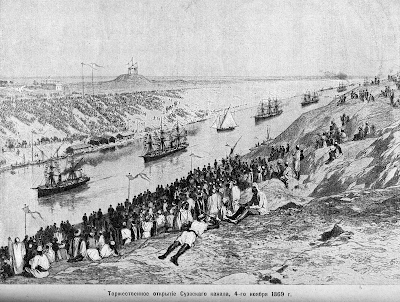
Panama Canal

The first pipeline was built in the US by Byron Benson in the US. The pipeline was 180 kilometer long:

"They had to surmount very significant and technical difficulties. First, no one had ever built a pipeline this wide. They proposed a 6-inch diameter of pipe. Second, they were building through the Allegheny Mountains which required going up and down very steep valleys and building in the total wilderness.", Britannica

This pipeline was build within one year from 1878 to 1879.

The construction of the Empire State Building is one of the most amazing success stories: With 443m height, it was the largest building in the world until 1971. The construction was done in 18 month from 1930 to 1931.
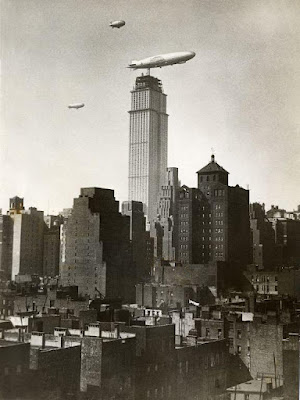
Empire State Building at construction time

The Manhattan Project in the 1940s managed to build a nuclear bomb — at a time when the scientific foundation of the field was not yet fully established — within three years. The Hoover Dam in the 1930's was finished in five years, the Golden Gate Bridge (built around the same time) in four. And it took the US eight years — from 1961 to 1969 — to put a man on the moon.
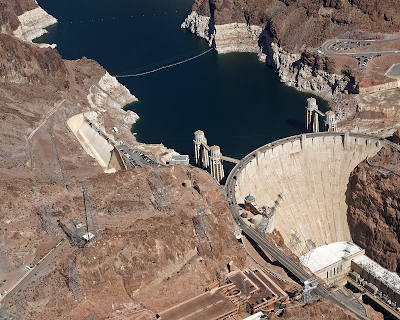
Hoover Dam

In Austria, the first Wiener Hochquellenleitung, the first Vienna Mountain Spring pipeline was built in the 19th century in four years. It had a length of about 100 km and the grand opening was done by Kaiser Franz Joseph I in 1873. The massive hydroelectric power plant, Kaprun, was built directly after the devastations of World War II, in eight years between 1947 and 1955. 
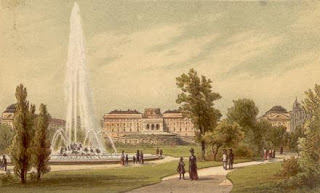
Fountain on Schwarzenbergplatz in 1873, where
Kaiser Franz Joseph celebrated the opening of the 
Vienna Mountain Spring Pipeline

And most impressively: during the 1970's, through the Messmer plan, France built 56 nuclear reactors within 15 years, many of which still deliver reliable and carbon-free electricity and are key to our energy survival this winter in Europe.
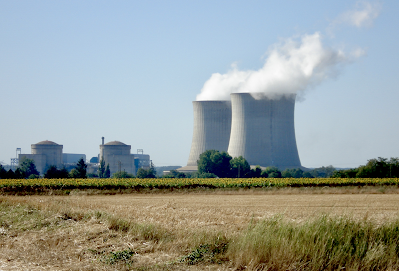
French Nuclear Power Plant

But surely we must be much faster today, given all the innovation we have achieved since?

China has indeed seen similar achievements more recently. The Three Gorges Dam was built in eight years, and the Hong Kong–Zhuhai–Macau Bridge, with a 55 km-length, the longest open-sea fixed link in the world, was built in nine years.
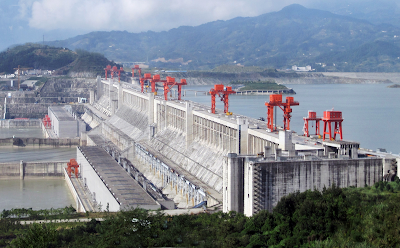
Three Gorges Dam

But when we look at the infrastructure and building projects of recent years in Europe and the US, the picture looks all but rosy. Just a handful of examples: the construction of Elbharmonie (a concert hall in Germany) took nine years to complete, and the cost exploded from €200 million to nearly €900 million. To put this into context: we needed the same time to build a concert hall, as our forefathers needed to build the Panama or Suez Canal. More importantly though, there are probably thousands of concert halls around the world to serve as precedence, whereas the Panama Canal was a construction unprecedented at the time.

Speaking of run-of-the-mill projects, take airports around the world: there are roughly 500 in France, Germany and the UK, 900 in Argentina, 14,000 in the US, even 17 in Antarctica. One would be forgiven for thinking we know how to build airports by now. And yet, the building of the Berlin airport took 14 years and created massive cost overruns. It is not even clear whether it can ever be operated economically. 

This is not only a German phenomenon: while we built the first mountain spring pipeline for Vienna of 100km length in the 19th century in four years, the Semmering-Basistunnel, a tunnel project in the mountains close to Vienna, with a length of 27km, is under construction since 2012 and is supposed to be finished in 2030, after 18 years of construction. When Finland undertook to extend one of its nuclear power plants, the Olkiluoto Block 3, the schedule and cost estimations were constantly overrun. Current estimates put its completion at this year (2022), after 17 years of construction. To put this into context: France built not one but 56 power plants in a shorter time.

In terms of energy supply we even seem to go backwards: opposed to the grand promises of “Energiewende”, Germany is burning more coal today than it did in the last years. 

Can these be dismissed as mere freak examples? A recent New York Times article suggests otherwise: 

  • The construction of the Honolulu rail transit with a length of 32 km started with an estimated cost of $125 million per km — $4 billion in total. And if this initial estimate in 2006 was not crazy enough for building a railway, the cost estimation now stands at more than $11 billion, with a planned completion by 2031. Should this estimation hold, it will have taken 25 years to finish a rail track of 32 km with a cost of  roughly $350 million per km.
  • In 2008, California started a high-speed railway construction to connect Los Angeles to San Francisco with  estimated costs of $33 billion. Construction was due to finish by 2020, in 12 years. Current estimates place the project completion in 2033 and the costs at $100 billion. 
  • The New York East Side Extension was planned to commence in 2006 and finish in 2011, with a budget of $2.2 billion. It now stands at $11 billion, with the completion estimated for December 2022.

Joseph Schofer, a Northwestern University civil engineer quoted in the article says »In the world of civic projects, the first budget is really just a down payment”, and Ronald N. Tutor, chief executive of Tutor Perini, a California firm that is building some of the nation’s largest projects, confirms that “All the major projects have cost and schedule issues”.

And as a last rather astounding example: in San Francisco the building of a public toilet was finally cancelled, after the planned toilet was estimated to cost $1.7 million.

Luckily the software world is all efficiency and innovation!

We could theorise that there is something particularly difficult about building infrastructure in the real world and that it becomes harder every day. But surely in the virtual world of software everything is fast, smooth and efficient, with one innovation overtaking the next. Or is it?

The term software crisis was coined in the 1960's and the situation has not improved since. Contrary to our perception that information and communication technology (ICT) is moving fast and reinventing itself all the time, this is not true behind the scenes. Just some examples for illustration. All of these issues are, on an engineering level, comparable to building the Golden Gate Bridge with such serious flaws that would cause it to collapse a year later: 

Not only do we suffer from a dramatic lack of quality in our ICT infrastructure,  but we are also facing enormous maintenance costs and a large number of failed IT projects. One of the largest failures in Europe in the last years (but by no means the only one) was the SAP transformation at Lidl which was terminated after €500 million were sunk in the project.

Such incidents occur frequently. The bottom line is: we do not seem to have our ICT systems or infrastructure projects under control, which leads to security issues, data breaches and — more to the point of this article — massive cost and schedule overruns within the IT projects, but also increasingly bleeding into other infrastructure projects.

Why this is of utmost importance

The capability to build essential infrastructure like railways, bridges or nuclear power plants quickly and in reasonable quality is fundamental for a modern society, especially one that is facing a number of severe challenges. Should we, for instance, have serious intentions to decarbonise our economy, we need one Messmer-plan-like nuclear build after the other. And that at least at the level of speed and quality that France delivered in the 1970's and 1980's. 

We have to move fast on multiple fronts: 

  • restructure our energy infrastructure
  • onshore manufacturing again 
  • de-globalise  supply chains to a certain degree
  • modernise agriculture by utilising biotechnology, vertical farming, etc. 
  • maintaining and rebuilding infrastructure that we have neglected for decades.

All these activities could be a net positive for our economies and environment, provided that they progress reasonably fast and efficiently.

While classic economic liberals and environmentalists usually do not have much in common, but many seem to share this idea, that we can quickly improve our situation through innovation, and the implementation of entirely unproven or speculative technology. One side might be thinking of machines that suck carbon out of the atmosphere and of creating economic growth by floating the market with innovations; the other of Rube Goldberg-like machines distributed over continents that allow wind and solar power to replace fossil fuels, and build a hydrogen economy along the way.

Both are betting on technology that is not yet available or entirely unproven. This bet is off the table, if our capabilities to innovate and even to build conventional infrastructure is not on par with expectations.

Contemplating  causes

While we huddle in teams, attend design-thinking workshops and run extensive stakeholder consultations to debate even the slightest risk that could in theory occur in any given undertaking, important progress and transformation in the outside world seem to be standing still, and real existential risk building up. Why is it, that we don't seem to be getting many important things done any more, at least not with reasonable efficiency?

I believe that there is — as in all complex problems — not a single cause, but a number of intertwined ones. I will try to outline some factors that I believe  to contribute substantially. Yet, please consider it not an exhaustive analysis , but rather a call for discussion. 

I would welcome any comments that agree or disagree with these observations. 

1 Digitisation Disappointment and General Stagnation in Research and Technology

I find it quite remarkable, even if this is not sufficiently discussed in public, that although digitisation was promised as a booster for productivity, the opposite seems to have happened. Several prominent experts have written and spoken about this phenomenon, among them Tyler Cowan, Robert Gordon, David Graeber, and Peter Thiel.

Robert Gordon remarks that productivity gains between 2004-2012 were on the lowest point since the end of the 19th century, which is remarkable, considering that this was the time when digitisation accelerated. 

Tyler Cowan writes:

“the low-hanging fruit has been mostly plucked, at least for the time being. […]  The Great Stagnation continues and indeed worsens, driven by an increasingly dysfunctional politics.”

Gordon's article and Cowan's book are both around ten years old, but not much seems to have changed since. The Covid pandemic and the current energy crisis only appear to have worsened the problem. Even before the crisis, other critics told the same story. Peter Thiel  in a conversation with Eric Weinstein in 2019 said:

“stagnation started in the late 1970s, with exception of digital technologies; even within Silicon Valley things seem to slow in the last 7 / 8 years” and “I don’t think the Truman show can go on for longer than a decade”

Until now the situation has not shown any signs of improvement. Even the anarchist activist and influential public intellectual David Graeber surprisingly seemed to agree with Peter Thiel's assessment, in his book Bullshit Jobs as well as in a discussion with Peter Thiel in 2020 (Where did the Future go?):

“the pace at which scientific revolutions and technological breakthroughs occur has slowed considerably since the heady pace the world came to be familiar with from roughly 1750 to 1950 […]  and in most wealthy countries, the younger generations can, for the first time in centuries, expect to lead less prosperous lives than their parents did.”

Finally, I would like to quote Nicholas Bloom, who describes the fast decline of scientific performance over the last decades:

“research effort is rising substantially while research productivity is declining sharply. […]  it takes around 13 years for research productivity to fall by half. Or put another way, the economy has to double its research efforts every 13 years just to maintain the same overall rate of economic growth.”

So, getting nothing done is also a phenomenon in science, albeit with a different spin. I assume that the stagnation we experience and described here is a contributing factor. I believe it is driven by two factors: (1) the low hanging fruit are plucked and new technology is much harder to come by and (2) we are experiencing a fast degeneration of research quality, hiring and promoting of scientists at universities due to bureaucratisation of research, massive flaws in science funding, and lack of critical exposure of scientists to the real world. 

“Academia has a tendency, when unchecked (from lack of skin in the game), to evolve into a ritualistic self-referential publishing game.”, Nassim Taleb

Sabine Kleinert and Richard Horton write in a Lancet commentary:

“There is clearly a strong feeling among many scientists, and not only Nobel Prize winners, that something has gone wrong with our system for assessing the quality of scientific research.”

This does not only lead to an increasing amount of irrelevant science and science of questionable quality, it also brings a massive overhead and waste of academic bureaucracy and funding infrastructure with it:

“European universities spend roughly 1.4 billion euros a year on failed grant applications—money that, obviously, might otherwise have been available to fund research. […]  I have suggested that one of the main reasons for technological stagnation over the last several decades is that scientists, too, have to spend so much of their time vying with one another to convince potential donors they already know what they are going to discover.”, David Graeber

2 Regulations, Bureaucracy and Focus Loss

It seems obvious that as a society we need to regulate certain technologies that can have dangerous effects, and harm the environment, economy or society. But over the decades, regulation and red tape have become more and more extensive with increasingly dubious results. Regulating complex topics is very hard, and rarely done well. Gerd Gigerenzer provides examples of financial regulations to illustrate this point:  

  • Basel 1 (1988): 30 pages, calculations could be done with “pen and paper”; 18 pages primary law in the US — was allegedly too simple
  • Basel 2 (1996): more than 300 pages (did not stop the financial crisis of 2008)
  • Basel 3 (2009): more than 600 pages; more than 1.000 pages primary law in the US; consequences of these regulations are hard to understand and require specialised firms

The idea that complex problems need overly complicated regulations seems to be a fundamentally flawed one. More and more complicated regulatory frameworks help large market players and keep startups out of the market, they also allow experts to find esoteric holes that can be exploited and are counter to the original intentions. Far from making things safer, they often make things more complex and less safe, slowing down progress dramatically.

“Indeed much of the work of investment banks in my day was to play on regulations, find loopholes in the laws. And, counter-intuitively, the easier it was to make money.”, Nassim Taleb, Skin in the Game

Marc Andreessen also talks about stifling stagnation and describes this phenomenon with the example of two major political projects of Richard Nixon's:  One was the creation of the Environmental Protection Agency (EPA) to regulate the environmental impact of corporations, and the other was Project Independence — the Nixon-era nuclear roll-out programme. Analysis showed back then what we also know today, that nuclear energy is the cleanest, safest and best technology for producing energy. Based on this, 1,000 reactors were supposed to be built until the year 2000 in the US. That did not happen. “We got the regulation and stagnation but not the reactors.” Andreessen concludes.

David Graeber describes in The Utopia of Rules stagnation in our society and progress, but also a more unexpected consequence — computers became amplifiers of bureaucracy:

“The Internet is surely a remarkable thing. Still, if a fifties sci-fi fan were to appear in the present and ask what the most dramatic technological achievement of the intervening sixty years had been, it's hard to imagine the reaction would have been anything but bitter disappointment.  […] 

Computers have played a crucial role in all of this. Just as the invention of new forms of industrial automation in the eighteenth and nineteenth centuries had the paradoxical effect of turning more and more of the world's population into full-time industrial workers, so has all the software designed to save us from administrative responsibilities in recent decades ultimately turned us all into part or full-time administrators.”

And finally Graeber writes in Bullshit Jobs:

“The most miserable thing about box-ticking jobs is that the employee is usually aware that not only does the box-ticking exercise do nothing toward accomplishing its ostensible purpose, it actually undermines it, since it diverts time and resources away from the purpose itself.”
and maybe very important for the considerations here:
“much of the reason for the expansion of the bullshit sector more generally, is a direct result of the desire to quantify the unquantifiable. To put it bluntly, automation makes certain tasks more efficient, but at the same time, it makes other tasks less efficient.”

So, did we use computers to automate the wrong things? To maximise distraction, support unnecessary bureaucracy while at the same time harming our capability to get things done?

3 Fear-driven Management and Juridification of Society

All this goes hand in hand with what I call the rise of fear or liability-driven management, which blossomed with the steady rise of the managerial / administrative class. In my experience there is often a substantial difference in decision making between founders/entrepreneurs and professional managers. The first group is deeply invested in their company, by definition holds in-depth knowledge (otherwise the company would not have survived) and makes active decisions, that is with mid- and long term prospects of the company in mind, driven by facts, taking risk. 

The managerial class on the other hand, more often than not, has a different priority: themselves. The question of management is reframed from: what is best for the company to how do I survive the next years while maintaining this salary and this position (or higher). As a consequence, decision making tends to be passive, risk-averse (as far as their own risk is concerned). This leads to an over-reliance on legal and professional consulting, which not only costs a lot of money but more importantly throws a spanner in the works.

“The final victory over the Soviet Union did not really lead to the domination of the market: More than anything, it simply cemented the dominance of fundamentally conservative managerial elites-corporate bureaucrats who use the pretext of short-term, competitive, bottom-line thinking to squelch anything likely to have revolutionary implications of any kind.”, David Graeber

Hand in hand with this trend of defensive and risk-avoiding decision making goes a juridification of society. As mentioned above, regulations get more and more complicated, old rules are hardly removed but new one are constantly added. As the Austrian lawyer Lukas Feiler explains in a talk:

“The interesting puzzle really is, how did we end up with such a complex legal landscape, when we all agree that it is simplicity what we would need. […] Moreover, politicians act on problems of the past. […] It is, as if politicians are driving a large truck by only looking into the rear mirror.”

So it seems, not only are we making our legal system unnecessarily complex, we also react to problems of the past, slowing progress down, while overlooking the actual risks of the future.

4 Specific Loss of Capability to Build Large Projects

And finally, after the more abstract considerations, we have witnessed a de-industrialisation of Western nations, which has even been lauded by pundits of different political affiliations. Market liberals saw it as an efficiency measure, and environmentalists were happy to get rid of heavy industry. The former did not consider that short-sighted efficiency measures had to be paid back with high interest rates in the future. The latter overlooked that we merely exported our polluting industry to other nations and more importantly, our know-how with it. If we don't maintain and build certain industries any longer, if we do not train new engineers, we will lose the capability to build related large projects.

The good news is that many of the successful and fast projects from the past were built without a lot of prior knowledge. So, with enough determination, there should be no reason why it should not be possible to quickly rebuild this capacity again.

As far as ICT is involved, we got entangled in a complexity trap. Over time, we improved our skills to make software, but we did not use these skills to build software better, but to constantly build more complex software that actually overburdened us. This is a serious problem, because software is the digital nervous system of our society and also of modern infrastructure. Having lost control over large parts of this digital infrastructure must have harmed large infrastructure projects in one way or another.

What next?

Firstly, I would like to test, debate and discuss the observations made in this article and would welcome your comments. Secondly, the fact that we experienced these achievements in the past shows that we are capable of building large infrastructure fast and reliably. We might have lost that now but a better understanding of the reasons could bring us back to where we were. This is the good news. The bad new is, if the Western world will not do it, other nations will, to our disadvantage. So as a next step, more concrete ideas have to be developed on how to improve the situation. I think solutions will have to consider the following aspects:

  • Ensure that managers and politicians have skin in the game
  • Reward risk taking to a certain degree, not defensive decision making
  • Decidedly remove unhelpful bureaucracy and red tape
  • Rethink science funding fundamentally
  • Aim for generic and simple, not complex and specific legislation (or rules in general, this also applies to corporate processes and the like)
  • Allow failure, iterate, while paying attention. Keep going and adjust with new learnings

Final Remarks and Possible Objections

One possible objection to this article could be that I am cherry picking examples. The examples I have found seem to be too common to dismiss as exceptions to the rule. The New York times article also points to the same findings. But if you believe otherwise I would be interested in receiving your comments. 

One could also criticise that the historic projects are not really comparable to modern ones, given that the working conditions during the construction of, for example, the Panama or Suez canal 100 or 150 years ago were certainly not up to modern labour-standards. Yet, even with complying with modern labour standards, shouldn't we be easily able to compensate the potentially slower progress of non-exploitative methods of working with supposedly vastly superior technology, equipment and computers?

It is also important to note one constraint in my selection of examples: I explicitly did not choose examples of modern undertakings that are especially innovative or have not been achieved so far (though hyped by some and dismissed by others), for example uploading the brain into the computer, colonising Mars, nuclear fusion power plants or the like. One could easily argue that these types of projects are inherently much harder than building a canal or a dam. 

In this article I am referring only to construction scenarios that we have done repeatedly in the past like dams, railway lines, bridges, opera houses and even nuclear power plants. For context, globally about 450 nuclear power plants are in operation today, and even more were built in the past or still under construction. So I chose infrastructure projects that are the opposite of new, and existing everywhere around us already.

One last note: The projects I have highlighted in this article were not selected because they are necessarily useful or ethical, but only for their engineering and management prowess.

Montag, 5. September 2022

Climate Change is Over

Climate Change is Over. Not in the real world, it is not, but in the public eye and politics. Western industrialised countries face a severe hit by inflation, recession and exploding energy prices. The consequences are not yet fully felt by average people, but they will, latest after this winter. Should the conflict with Russia not change dramatically over the next months, we will see large numbers of people whose moderate wealth will be gone in half a year. They will be barely able to pay their energy bills, food prices are rising and industries are closing. This will likely kick off a feedback loop of unemployment combined with rising prices. Even though most German and Austrian media decide not report week long and large scale farmers-protests in Holland, protests all over Europe and the US   will be harder to ignore. 

Let's hope that I am wrong about this prediction.


What will be the consequence for »climate change«? In the last decades, climate activism was largely a western elite project that never really took off, even though it got a lot of air time. Nations that actually count: China, Russia, India did barely participate in the conversation, the poor countries in Africa were on occasion bullied into submission to their disadvantage.

In Europe and the US it was fashionable to be »for climate« as long as there were no real costs involved. At least no costs that were easily seen or experienced by those elites. One apocalyptic message followed the next, albeit mostly not backed by science. »Follow The Science« was the slogan from people who neither understood what science actually is and who followed only that part of science they liked. 

More importantly activists and many politicians did not understand that there is not one biggest problem — climate — but that we actually face a number of potentially catastrophic problems. Climate change is one of them, but probably not among the top three. Nuclear weapons, pandemics (especially considering the developments in synthetic biology), collapse of infrastructure that supports or modern society (energy, IT, supply chains) would be my top three.

Many still do not understand that »problems« like climate change are not problems you can solve. Even the word problem is a misnomer. They are dilemmas (or polylemmas, to be precise). Any action that mitigates the one tends to create issues in others. They require skilled political navigation not to improve one and create a worse problem on the other side. We were really bad at that in the last years: the energy crisis in Germany (and Europe) is a a consequence of an incompetent attempt to change the energy production in Germany too fast and in the wrong direction. This lead to an energy mix that does not work in a modern society and a geopolitical dependency on Russia on top of that. 

Obviously war itself can be a consequence of resource and energy problems. War or conflicts among nations that include the US, China or Russia — as we see now on all fronts — increase the risk of nuclear exchange. And after an nuclear war, climate change will be the least of our problems. And the risk of such an exchange we increased!

A lot of other compounding factors could be mentioned: people should not eat meat in Europe (when the developing world increases their meat consumption steadily) and should buy organic products, which are a wild mixture of reasonable ideas with esoteric nonsense and practices that increase the environmental impact or collapse, if applied globally. On top of that, climate activism got entangled with one sided political aspirations (»against capitalism«). This is activism at its worst: once you are »against climate change« you had to be automatically »against capitalism« (in its crudest form of critique). This is hardly a winning strategy you will find societies stand behind.


Sensible environmentalists warned for a long time from this type of strategy. Climate actions that (1) have no real effect because major nations are not participating but (2) ruin the wealth of participating nations and (3) are driven by obscure political ideologies will backfire. They work as long as they are a useful moral grandstanding tool for educated elites (»educated« in the sense of, having passed our higher-education system) and companies that can put a pledge on their yoghurt. As soon as systems are actually collapsing due to these inept measures, climate change is over. No one wants to hear that they should protect »the climate« when they are jobless and cannot pay for their energy bill, as far as the lower class is involved. For the middle class, the fact that flying to Greece, London or New York, and a number of other recreational activities are off the table, should be sufficient to suffocate their aspirations. Now it would be the real deal, not just virtue signaling. 

India, China and many other countries Africa and Asia are learning the lesson by observing Europe and California: the richest, and (at least on paper) most capable nations entirely failed with their energy transition: they got poorer, are on the verge of collapse and did not even show a noteworthy effect (check the carbon intensity of the German energy production of the last five years):


Electricity Map, last five years

Climate change is over. It was never really on the table in China, India, Russia or Africa, soon it will be off the table in the US and Europe. This is obviously not a good thing.

How should we go forward?

The situation is bad for Europe and the US, but not necessarily globally. We learned how not to do an energy transition. We have to stop listening to the inept branch of environmentalists that dominated the scene over the last decades. I think environmentalism is supposed to tell a story, where human flourishing is not an afterthought at best. We have to talk about resilient societies, urban communities with high living standards (for instance due to fewer cars and better local supply), affordable and reliant energy, which is incidentally also low carbon, especially nuclear. We should discuss diversification of supply chains, thus bringing jobs back to Europe and the US, without becoming xenophobic. Now is also the time to kickstart new industries like vertical farming, lab grown meat (not veganism!), improve our capabilities in genetic engineering to reduce the impact of agriculture on the environment. 

This is also the chance for Europe to (1) have a real impact on climate and environment globally while (2) saving its economy. We can show (and sell the tools to) the world how to make tasty lab grown meat, nuclear reactors that scale from container ships to cities, create modern agricultural practices that adapt to changing climate while producing more with a smaller footprint (without the esoteric stuff we see today in  many organic practices), build vertical farms, show how liveable cities without reliance on cars could look like, to mention just a few examples.

We have to show the world that we can live well while at the same time reducing out impact on natural systems, not trying to reduce the impact while destroying societies. A very ambitious goal, but one with a chance to succeed, opposed to what we currently do.

Update 22.09.2022 

United Kingdom: Mr Rees-Mogg (business secretary of Liz Truss) said: »In light of Putin’s illegal invasion of Ukraine and weaponisation of energy, strengthening our energy security is an absolute priority[…]«

Update 13.12.2022 

... and the German electricity production emissions keep getting worse.


In the last month Germany produced electricity with nearly 800g CO2 per kWh. France about 120g. 6,6x more Emissions than France after twenty years of “Energiewende”.


Dienstag, 5. Juli 2022

Brexit Tales

As often discussed in the last years. There were a number of very good reasons for Brexit and a number of very good reasons against Brexit. However, these reasons were rarely exchanged due to a joint failure of political culture and media incompetency in the UK and even worse in Germany and Austria (probably in the rest of Europe too, but I can only judge the media discourse in these two countries). 

There were clearly no so called »rational«, hard arguments as the nonsensical economic predictions of both sides suggested. In a highly complex situation none of those are worth anything. Predictions are moot. 

It was a judgement of values and expectations. For instance: do we have trust in the capability of the EU in political and economic terms? Do we believe that the Euro was established and is governed in a reasonable and trustworthy manner?

Kugelgasbehälter

If you answer these and similar quesions with no, you clearly want to be the first leaving the sinking ship, not the last. Current German and European performance in terms of energy and economy indicates that the British sceptics very well might have been correct.

Donnerstag, 23. Juni 2022

Searching the keys where the light shines

As the old joke goes: a drunk person on his knees in front of the pub. Another guest comes out and asks  what he is doing, I am searching for my keys. So the friendly guest helps him. But they don't find the keys, so he asks the drunk, Are you sure, you lost the keys here? — No, around the corner, but there is no light.

Ross Ashby (1948)


In 1970 Ross Ashby publishes the book Introduction into Cybernetics. One key insight in this book is:

»Science stands today on something of a divide. For two centuries it has been exploring systems that are either intrinsically simple or that are capable of being analysed into simple components. The fact that such a dogma as " vary the factors one at a time" could be accepted for a century, shows that scientists were largely concerned in investigating such systems as allowed this method; for this method is often fundamentally impossible in the complex systems.«

In brevity, to circle back to the joke: we search our car keys where the light is, not where we lost them. 

Science did the same thing in the past. Search and explain the simple (as in not complex) problems. In the mid of the 20th century cybernetics tried to turn this approach towards the complex; Also sciences like biology move (in part) from a descriptive to a complexity-science, for instance ecology. But from the late 1970s/80s on, cybernetics ran out of fashion and was sort of replaced by complexity science. 

And yet, it looks to me, we are still at the beginning. There are fields in science, where there is a focus on systemic behaviour, ecology, climate science, (small) parts of medicine come to mind. But I believe, that scientific practice is largely even worse today. As generalist you can hardly make a career in science these days, so people focuse on ever narrower fields of »expertise« or sets of methods, not even interested in trying to understand complex phenomena — the world — at large. It is more rewarding (in a career perspective) to work for instance on some obscure mathematical framework that cannot be applied in any reasonable sense to our world, but has a dedicated scientific community.

Searching where you know what you will find (because you outlined it in the grant proposal for the years to come) with the methods your institution is known for. Curiosity killed the cat scientist..

Is this science or rather a joke?

Dienstag, 19. April 2022

COVID—Did we learn anything, aside from moral grandstanding?

I just came back from a two week trip to England. One observation is stunning: no one is doing any Covid-precautions. No masks, no nothing. All restrictions were lifted in the UK from Feb. 24. Even in the London tube you only see the odd person wearing a mask (probably tourists), 99% nothing. My wife and I were both wearing masks in England in all situations I would have in Europe — and were the only ones.

We had the strongest political interference into our personal rights since I was born, and this is roughly half a century. Such measures can be warranted but shout for open discussion, as fas as I am concerned. I am certainly not opposed to measures against a pandemic that are working, but the observations are starting to get really odd. Now I look at some data


(1) Germany and Austria, with strong measures, had numbers way above England and the US over the last three months, before Christmas the situation was seemingly a bit different but over the last 6 - 9 months certainly roughly the same. The principal patterns over time are pretty similar though.

(2) Now look at Florida and California: Florida, a red state, had barely any measures, California on the other hand, as woke as it gets, has/had among the strongest measures in the US, as far as I know. Both curves over the last 6 months are roughly identical. 

Some context here: Florida has ~22Mio (126/km2), California ~40 Mio (98/km2) inhabitants. Florida also has a much older population and should generally be hit harder.

Anyways: I want to be clear about one thing: I am not against measures, I am just stunned that none of these things are discussed in the popular media, for instance in Austria, as far as I see it. Why? If we take measures that cost a fortune and limit our freedom considerably, I think we should know if they work. Instead we are entirely polarised in an important topic. These aspects have to be discussed in public, do we not want to loose the majority of our population in the political process. 

Did we make a mistake in the past, did we err on the side of safety, fine. I want to know though for the future. Were our measures working and appropriate? Also fine, then explain these and other inconsistencies.

So what is going on? My gut feeling is that we still don't really have a reasonable clue what is going on with Covid, especially as far as epidemiology is concerned. But our »experts« nonetheless happily share their opinions as if they are indisputable facts, even though the next expert claims the opposite. At the same time we make a moral not a reason problem out of it, which is really not a good idea, should we want to learn from this disaster, that was our reaction to the pandemic.

There is certainly the possibility that this data is crap, but that does not make the situation better: why would John Hopkins & Co then publish and aggregate data that is nonsensical? Just because you can? Makes us all feel like real scientists or at least rational citizens, when we use Our World in Data, believing, we make better decisions with more data, but do we?

Opposed to two years ago, when evidence based decision was not an option, now it is. Are we really operating evidence based and discussing it? I cannot see that.

What will we do in Autumn, should the next wave come? The same procedure as every year? 

Freitag, 11. Februar 2022

Zwischen Genie und Wahnsinn — Brauchen wir extreme Charaktere?

»People confuse science and scientists. Science is great, but individual scientists are dangerous.«, Nassim Taleb, Fooled by Randomness

HIV-Entdecker Luc Montagnier ist verstorben. Umstritten ist er übrigens nicht, wie vom ORF berichtet, weil er vermutet, dass COVID von Forschern geschaffen wurde. Das ist eine sehr wahrscheinliche Möglichkeit (YouTube). 

Luc Montagnier (Wikimedia)

Umstritten ist er, weil er in qualitativ sehr fragwürdigen Studien versucht hat Homöopathie zu belegen, weiters dass sich DNA von einem Gefäß ins nächste teleportieren würden und Infektionserreger an Autismus Schuld wären.

Montagnier ist übrigens bei weitem nicht der einzige Nobelpreisträger, die nach dem Nobelpreis, sagen wir es vorsichtig, an intellektueller Schärfe haben vermissen lassen. Dazu habe ich vor einiger Zeit einen eigenen Blog-Artikel geschrieben.

Wobei ich meine Ansicht hier ein wenig geändert habe: es gibt die interessante Theorie, dass es häufig sehr schräge und atypische Personen, wie etwa Kary Mullis oder James Watson sind, die wirkliche Durchbrüche zu erzielen. Diese Charaktereigenschaft, die auf der einen Seite hilfreich ist um intellektuelle Meisterleistung zu erzielen führt dann an anderen Stellen zu kaum verständlichen Verrücktheiten. 

(Bei vielen führt sie allerdings nur zu Verrücktheiten, das soll auch nicht verschwiegen werden. Sprich: atypische Persönlichkeit ist natürlich kein Garant für geniale Entdeckungen.)

Der bekannte Spruch über »Genie und Wahnsinn« dürfte Substanz haben. Die tiefere Frage könnte daher sein: brauchen wir solche grenzwertige Charaktere um die Welt weiterzubringen, und müssen wir schlicht mit den fragwürdigen Nebenwirkungen leben? 

Wokeistan scheint dafür kaum geeignet zu sein. Der Wunsch alles was nicht stromlinienförmig und politisch korrekt ist zu blockieren, dürfte langfristig kein Erfolgsrezept zu sein.

Zum Abschluss...

Es freut mich, dass Sie sich die Zeit genommen haben, mein Blog zu lesen. Natürlich sind viele Dinge, die ich hier diskutiere aus einem subjektiven Blickwinkel geschrieben. Vielleicht teilen Sie einige Ansichten auch nicht: Es würde mich jedenfalls freuen, Kommentare zu lesen...

Noch ein Zitat zum Schluß:

"Ich verhielt mich so, als wartete ein Heer von Zwergen nur darauf, meine Einsicht in das Tagesproblem, zur Urteilsfindung von Gesellschaft und Politik zu übersetzen. Und nun stellt sich heraus: Dieses Heer gibt es nicht.

Ganz im Gegenteil erweist sich das kulturelle Getriebe als selbstimmunisierend gegen Kritik und Widerlegung. Es ist dem Lernen feind und wehrt sich in kollektiver Geschlossenheit gegen Umdeutung und Innovation.", Rupert Riedl, Evolution und Erkenntnis, Piper (1985)

:-)