Posts mit dem Label Technologie werden angezeigt. Alle Posts anzeigen

Mittwoch, 22. Januar 2025

Netzneutralität

 Vor ca. 15 Jahren war Netzneutralität das große Thema der selbst-ernannten Linken. Podcasts, Artikel, Aktivismen ohne Ende. Und zurecht! Dann ist es leise geworden. Möglicherweise hat man festgestellt, dass nicht nur die eigene Meinung frei vertreten werden kann.


Heute ist das Motte der »Linken« eher totale Zensur jeder Idee, die der eigenen auch nur ein wenig entgegen steht; gerne auch im Hintergrund und ohne rechtliche Grundlage — auch »Fact Checking« genannt.

Freie Meinungsäußerung (ein anderes Wort für Netzneutralität, denn die Invididuen entscheiden, was sie senden und empfangen wollen, nicht Konzerne oder Regierungen) gilt heute als »Rechts«.

Mit anderen Worten: Rechts/Links ist ein sinnloses Konzept für schlampige Denker und Aktivisten.

Mehr dazu im faszinierenden Gespräch mit Hyrum Lewis.


Sonntag, 14. Januar 2024

Software Destroying Lives — the UK Post Office Scandal — a Solitary Case?

“Hundreds of self-employed workers at the state-owned Post Office were wrongly prosecuted or convicted between 1999 and 2015 for false accounting, theft and fraud because of glitches in a software system that incorrectly showed money missing from accounts.

Some spent time in jail, while others went bankrupt, saw their marriages destroyed, and some died before their names were cleared.”

and: “The Post Office maintained for years that data from the defective Horizon computer accounting system, developed by Japan's Fujitsu and rolled out in 1999, was reliable, while accusing sub-postmasters of theft.”, Reuters

I have been working for a long time on the question of software complexity and quality, or rather, the lack thereof, in most systems under observation. The low quality of software combined with increasing, I want to say, crippling complexity shows increasing bad effects on our society, which is entirely dependent on software. Software is the digital nervous system of our world, and we are suffering from a severe neurological disease in that sense.

Take a look at my YouTube video on software complexity for more context and examples.

Now, what interests me even more than the specifics of this case is: why would this be an isolated case? Because all others produce software so much better? 🤣


Sonntag, 5. November 2023

Renewables in Europe: Satire takes over News

Impossible to distinguish between satire and news any longer: The solar industry “warns” that (after important parts of Europe moved to solar and wind) the energy prices are so hight that there might not be much of a future for the industry in Europe:

“Europe's bid to expand its green tech industry faces a host of challenges, including high energy costs and supply chain issues, solar industry representatives gathered in Madrid warned on Thursday.”

"Europe isn't profitable"

But they are producing in China (~500g CO2e), Vietnam (~400g CO2e) and Thailand (500g CO2e). France by comparison has < 100g CO2e.


The production conditions of solar in China are especially relevant:

“But the majority of experts consulted by Environmental Progress agree that China’s competitive advantage did not lie in an innovative new technological process but rather in the very same factors the country has always used to outcompete the West: cheap coal-fired energy, mass government subsidies for strategic industries, and human labor operating in poor working conditions.”

Montag, 25. September 2023

Against all Odds — Open Data Formats Win?

Against all odds — Open Formats prevail! I find it very inspiring, that in the long run open formats seem to prevail, even if they are not initially taken on (or even fought against) by market leaders. Two examples I found inspiring:

  1. SVG, scalable vector graphics. I remember that I explained this format in my IBM XML courses in the early 2000s. To be honest, it was a fringe format then and I showed it as an example of possible XML-based data-formats, but honestly did not believe it would survive the next years. Now all major graphic applications support SVG and in increasingly better implementations.
  2. EPUB vs. MOBI/Kindle. Amazon, the by far largest ebook publisher never supported ePub in the beginning but pushed its own AZW/MOBI format. Recently Amazon is “winding down” support for its own format on Kindle and asks users to use ePub.

(The SVG logo definitely could use an overhaul though 😉)


Freitag, 23. Juni 2023

Existential Threats

What is an existential risk? The Cambridge Existential Risks Initiative (CERI) uses the following definition:

“An 'existential risk' (x-risk) is an event that could permanently and drastically reduce humanity’s potential, for example by causing human extinction.”, CamXRisk

A problem with discussing existential risks is that the definitions or understandings of it are quite ambiguous. Also, the Cambridge definition has a weakness. What does drastically mean specifically? 

I would try my own definition:

An existential risk to humanity is a threat that could damage large parts of the planet or human structures or kill  large parts of humanity to an extent or in a way, that a recovery to modern levels of society is not likely within a timeframe of a centuries.  

Every definition has its weaknesses, but I think we have a working understanding of what we are talking about. Of course, even if an existential threat does not go the full way, say we would face a nuclear exchange that is limited to Europe, the effects on the global society might not be existential in the narrow sense of the meaning but still very dramatic. Lastly, we have to keep further parameters in view, such as timeframe (how fast does the risk play out once it happens) and range of effects (how far-reaching is the effect, e.g. does it hit “only” humanity, or the whole global ecosystem).


Now having the definition game out of the way, what existential risks are out there, can we list and maybe even rank them? Or does a ranking of existential threats make no sense at all?  Existential means, (1) huge consequences when the worst case happens and evidently also (2) it did not happen yet, at least not to our modern society. That means, we have no proper statistical basis to draw reliable conclusions from. A ranking could be based on probabilities of entry and severity of effect. But as we do not have sufficient data from prior cases for that reason, probability of entry are very vague and usually just guesses. The same is true for the severity of the effect. As Niall Ferguson writes:

“A pandemic is made up of a new pathogen and the social networks that it attacks. We cannot understand the scale of the contagion by studying only the virus itself, because the virus will infect only as many people as social networks allow it to. At the same time, a catastrophe lays bare the societies and states that it strikes”

This is not only true for pandemics, but for other societal and potential existential risks as well. To estimate the effect of an existential risk thus means (1) we have to understand the mechanic of the risk very well and (2) how societies react to it. For that reason, the situation can be counterintuitive in numerous instances. For instance, climate changes and yet predicted (and reported) effects do not actually happen:

“annual US deaths from tornadoes have fallen by more than a factor of ten since 1875” 

or extreme weather events might increase in some places and still:

“weather-related death rates fell dramatically during the past one hundred years even as the globe warmed 1.2°C (2.2°F); they’re about 80 times less frequent today than they were a century ago. That’s largely due to better tracking of storms, better flood control, better medical care, and improved resilience as countries have developed. A recent UN report confirms the trend over the past two decades.”, Steven Koonin, Unsettled

Of course, this could change significantly should we come into a runaway situation, which some climate scientists are afraid of but others dispute. The bottom line is: we usually know much less about the mid or long-term outcomes of complex systems than we think we do.

So, any ranking of existential risks tends to be a fools' errand. Thus, in my list the ranking is not to be taken too seriously, but it is not entirely negligible. For instance,  nuclear weapons are number one for a good reason: There is a reasonable chance for a full nuclear exchange, and the consequences are absolutely catastrophic, mitigation and adaptation are minimal, and all that happens in a very short timeframe. Whereas population collapse is a significant threat for our society and there is little room for mitigation, but plays out over decades or centuries, and we can hope for adaptation measures. Climate change is in between, and actually very similar in its mechanic: there is not a lot we can actually do to mitigate, especially in a short time frame, and the effects will most likely play out over long periods of time, which again, opens room for adaptation. But the effects are wider ranging than population collapse, in that the whole biosphere is effected.

These are the reasons why climate change is not in the top five in my list. It is not one event, it is gradual and adaptation much more likely than a nuclear war. Other large humanitarian problems like hunger, poverty or malaria are not on that list either. These, and many others, are terrible threats to human flourishing in parts of the world but are not threatening humanity in a larger or long-term sense. They are rather effects of other problems. Again, this does not mean, we should not do anything against those, but it is simply not the focus of this discussion.

Systemic aspects of most existential threats forbid a naive reading, in the sense, that we should work the list from top to bottom and only continue to “the next action item” once we have completed the previous. In fact, the most fundamental insight is, that there is not one “biggest problem”, not even three or five. Living in a modern, complex society — in the Anthropocene — has positive effects:  we are farther away from nature, safer and with much higher living standards than ever before. We do not die any longer in harmony with nature, as Hans Rosling put it. But it also has negative effects which can be, unfortunately, existential. Many, if not most, of the threats on this list are connected in complex ways. This means, we most likely cannot solve any of those, especially not in isolation. But it also means that we got our priorities wrong in the last decades. 

»We are always well prepared for the wrong disaster. […] But history warns us that you don’t get the disaster you prepare for.« , Niall Ferguson

and

“For every potential calamity, there is at least one plausible Cassandra. Not all prophecies can be heeded. In recent years we may have allowed one risk — namely climate change — to draw our attention away from the others.”

Also, as mentioned above, some threats are on the list are not isolated but can be seen as a potent trigger for other threats, e.g. political extremism or collapse of infrastructure.

Thus, focusing on the mitigation of one risk alone (e.g. climate change), can dramatically increase other risks, as each medication has side effects. Would we, for instance, Just stop oil, this would be a guarantee of an existential disaster for humanity. Often, we did not only get the priorities wrong, but our activities were so inept that they, in fact, increased the risk they were supposed to mitigate and also negatively affected many other risks, especially the ones higher on the list. 

Not focusing our attention on one risk alone is clearly not easy considering the dominating mode of (legacy) media and politics. But it is like not smoking to stay healthy, while at the same time driving a motorcycle and doing wingsuit jumps from mountains. Whatever we do should be a wide-ranging approach, trying to make our society more resilient against various risks, for instance: 

  • Increasing diversity (in supply chains, food production, energy systems, ...).
  • Providing redundancy for important services (grid replacement part agains Carrington events, emergency hospital beds, etc).
  • Preparing for catastrophes with emergency management, properly funded military, etc.
  • Decoupling (for instance financial services), so that a catastrophe in one country does not immediately spill over to others.
  • Creating smaller decoupled, redundant structures that organise bottom up, not heavyweight top down ones.
  • Making societies more wealthy and educated in general helps the society to be better adapted to critical events. This clearly stands in opposition to the ideas of many “progressives”.
  • Try to estimate the positive effects of an intended measure per Euro spent instead of following ideology-driven activities.

One example, where we failed in an embarrassing way and saw our near total lack of preparation is the Covid crisis, to just mention a few aspects:

  • Even though pandemics of this type happened in the past and were predicted by experts, we had no proper studies, which emergency measures would be actually helpful (and even three years later the knowledge is scarce). 
  • We had no PPE stocked in reasonable quantities, not even for medical personel.
  • We had not even crisis processes defined. In the middle of the first lock down, I followed a discussion in German media, where experts were contemplating, where infected people should do. Should they go to the general practitioner or not, to the hospital, etc? 
  • We had no clear and unifying reporting framework established, and even years into the pandemic the data quality was bad.
  • We had no prepared plan how to come to reasonable conclusions quickly, which actions to take (virologists are not the only experts that have a say in a pandemic).

All of these preparations would not have been expensive at, especially considering the cost the lack of preparation inflicted on our society and the fact that we had people whose job it was to do just that.

I think we can create a much more resilient society and mitigate some of the risk, and adapt to others — maybe shift them from existential to problematic, so to speak. Now to come to a suggested list of existential threats with a vague prioritisation subject to what was said before:

  1. Nuclear weapons, voluntary and especially also  involuntary deployment (as we had a very close shave more than once)
  2. Natural or engineered pathogens leading to pandemics — especially considering the recent developments in synthetic biology
  3. Collapse of critical infrastructure (or multiple infrastructures in a domino effect, e.g. ICT failure or attack on ICT triggering energy problems, or financial services supply chains, etc.) that supports or modern society due to human errors or complexity spinning out of control, such as
    • energy infrastructure (e.g. way too little supply of fossil fuel in the next decades; large scale collapse of grids)
    •  global financial system
    •  ICT
    •  supply chains
  4. Solar Superstorm (also called a Carrington Event) which could destroy large parts of modern electrical infrastructure at once. It happened already in the past, for instance in the year 1859 (where the damage was limited for obvious reasons), but we also had a close shave in July of 2012. Also insurances describe that risk, for instance Lloyds:
    • “A Carrington-level, extreme geomagnetic storm is almost inevitable in the future.”
    • “The total U.S. population at risk of extended power outage from a Carrington-level storm is between 20-40 million, with durations of 16 days to 1-2 years.”
  5. Run away automation / robotic (»AI«, but on a more general level), especially in combination with one of the other risks on the list;
  6. Climate change (especially in the case that tipping points and runaway climate change occur)
  7. Nanotechnology or other ways of dramatically changing manufacturing and chemistry leading to nanomachines
  8. Population collapse is an existential threat in slow motion; “Will civilisation end with a bang or with a whimper? It is currently trending to end with a whimper in adult diapers.”, Elon Musk
  9. Ecosystem collapse, biodiversity catastrophe / “global domino effect”
  10. Unknown unknowns
  11. Green Genetical Engineering gone wrong
  12. Political/religious extremism (probably not per se, but in combination with or as a trigger of other factors mentioned above, e.g. nuclear weapons, bioweapons, etc.)
  13. Asteroid impact on Earth (which is so low on the list, because of the assumption, that we should be able to detect this threat early enough and mitigate it)
  14. Geoengineering accident

This list is thought as an encouragement to discuss this issue. Is the order correct? Probably not. Is something missing? I researched for a time to come up with that list, still, most likely I forgot something. This is also why one article focuses on unknown unknowns. This is important. As our knowledge is very limited, it appears to be much wiser to prepare our society for impacts of different types, as mentioned above. 

But is the idea of existential threat actually credible? Some pundits say that eventually humanity turned out to be more resilient than we believed at times (see also  Apocalype Always).  But I think it is short-sighted and such hand-weaving comments are problematic. It seems to be difficult to argue that e.g. nuclear weapons are not an existential threat. Just because someone played Russian Roulette six times and did not die, does not make it a save pastime. 

The confusing fact that nuclear weapons also (most likely) avoided world war three in the past indicates how complex the situation is. Mutual assured destruction, on the one hand, might have avoided a war, but should it still come to a war — even due to technical or human error, as we have seen in the past — it would be, well, mutually destructive. There is no way around it. 

And this paradox seems to be a common attribute of many modern technologies, which seem to make the edge between benefit and catastrophe ever sharper. So we are well advised to take these threats seriously. But to reiterate a point, I made in the beginning: it is a major mistake to mostly focus on one threat in this list and believe we can reduce our societal risk. 

We will not. 

Mittwoch, 12. April 2023

The Death of the Eccentric (and Relevant) Professor (and what ChatGPT will do)

 “The eccentric university professor is a species that is going to be extinct fast. […] The bad currency is driving out the good and in effect where the people who are nimble in the art of writing for grants are displacing the idiosyncratic thinkers who are generally much less nimble at that sort of activity.”

Peter Thiel (in discussion with David Graeber) spot on in 2014. Exactly that happened. 

But now consider, what ChatGPT etc. will do? The bad currency now gets amplification by “artificial intelligence”. And I think the best description for ChatGPT might in fact would be: mediocrity amplifier (similar like its data-foundation Wikipedia).

Sounds like what happened in banking and investment in the last decades and worked perfectly well as we all know (2008, 2022, ...).


Dienstag, 13. Dezember 2022

Grüner Wasserstoff — die nächste energiepolitische Fehlentscheidung Deutschlands?

Was ist das Potential von Wasserstoff als Energiespeicher beziehungsweise Energieträger für die »grüne Zukunft« und Energiewende? Michael Liebreich hat eine sehr interessante Zusammenfassung geschrieben, die sehr differenziert auf verschiedenste Anwendungsbereiche eingeht und sich mit zahlreichen anderen kritischen Analysen deckt. Ganz kurz zusammengefasst würde ich folgende Aspekte hervorheben:

Wasserstoff wurde im 18. Jahrhundert von Henry Cavendish entdeckt und dargestellt.

Erhebliche staatliche Investitionen in die Wasserstoff-Wirtschaft sind aktuell im Gange, besonders Deutschland und Japan stechen hier hervor. Der japanische Premierminister wird zitiert:

“Japan aims to commercialize an international hydrogen supply chain by producing hydrogen in bulk at low cost in countries blessed with bountiful renewable energy resources coupled with marine transport infrastructure.”

Der deutsche Kanzler Olaf Scholz betont die Kollaboration mit Kanada und der deutsche Wirtschaftsminister Habeck mit Namibia und Südafrika:

 “In August he and Canadian Prime Minister Justin Trudeau flew to Newfoundland and Labrador to sign an agreement to “create a transatlantic supply chain for hydrogen well before 2030, with first deliveries aiming for 2025”. As I write this, German Economy Minister Robert Habeck is on a five-day trip to Namibia and South Africa to secure hydrogen supplies.”

Diese und ähnliche Projekte versprechen sowohl ökonomisch wie ökologisch kontraproduktiv zu sein, wie sich nach der weiteren Analyse herausstellt:

  • Transport von Wasserstoff macht ökonomisch nur über Pipelines Sinn, denn auf das Volumen bezogen ist die Energiedichte viel zu gering. Mit einem Faktor von 2,5x dem Volumen im Vergleich zu Flüssiggas ist anderer Langstrecken-Transport weder ökonomisch noch ökologisch sinnvoll. Dazu kommen erhebliche technische Probleme aufgrund der benötigten niedrigen Temperatur.
  • Andere Formen des Transports wie als Gas unter Druck, in Metallschwämmen oder LOHCs sind entweder noch unwirtschaftlicher oder schlicht technisch (trotz jahrzehntelanger Forschung) nicht machbar.
  • Der Transport über Derivate wie Ethanol oder Methan kann für bestimmte Industrieanwendungen sinnvoll sein, für Energieproduktion aufgrund der enormen Verluste nicht. 
  • So scheint auch die Herstellung von Ammoniak für die weitere Energieerzeugung aus »erneuerbaren« Quellen wie Wind (wie offenbar zwischen Deutschland und Kanada angedacht) bestenfalls ein grünes Feigenblatt zu sein. Es treten dabei energetische Verlust in der Größenordnung von 80% auf; vermutlich mehr, weil der entstehende Ammoniak nicht leicht direkt verbrannt werden kann und weiteres Cracking erfordert.
  • Selbst für die Produktion von Dünger dürften diese Verluste nur wenig Sinn machen. Dazu kommt, dass industrielle Verfahren wie das Haber-Bosch-Verfahren zur Produktion von Ammoniak kontinuierlich gefahren werden müssen, was die Nutzung von unzuverlässiger Stromproduktion von Wind und Sonne ohne Backup kaum sinnvoll erscheinen lässt. Diese Verluste müssen ebenfalls berücksichtigt werden.
  • Die Anwendung in Flugzeugen ist ebenfalls aufgrund der niedrigen Energiedichte pro Volumen bestenfalls für Kurzstrecken oder Privatjets denkbar. Auch die Logistik der Treibstoffversorgung für Linienflüge ist de facto prohibitiv.

Kurz gesagt: das Versprechen, dass Wasserstoff als »grüner« Energiespeicher eine wesentliche Rolle in der Zukunft einnehmen kann ist mit großer Vorsicht zu genießen. Transport scheint bestenfalls über Pipelines sinnvoll zu sein. Das schließt Transport aus Amerika oder Afrika auf absehbare Zeit aus. 

Die aktuellen deutschen Projekte in dieser Hinsicht sind daher vermutlich eine ähnliche Fehlentscheidung wie die Energiewende der letzten Jahrzehnte.

Ein weiteres, wie mir scheint, wesentliches Problem, wird in diesem Artikel allerdings gar nicht erwähnt: Wasserstoff ist selbst als Klimagas zu bewerten, wie dieser Nature-Bericht darlegt:

“the release of one ton of dihydrogen into the atmosphere corresponds to the emission of nearly 13 tons of CO2 equivalent.”

Wenn also Wasserstoff-Gas bei Produktion, Transport oder Nutzung in die Atmosphäre entweicht, was besonders bei Transport mit Schiffen zu erwarten ist, so hat eine Tonne Wasserstoff etwa denselben Effekt wie 13 Tonnen Kohlendioxid. Die Frage ist also: wenn wir ein Wasserstoff-Energiesystem in großem Maßstab planen — das schon aus den oben genannten Gründen wenig effizient ist — wieviel verlieren wir zusätzlich durch Leckage von Wasserstoff an »grünem« Potential?

Weiters stimme ich der Ansicht, dass E-Autos ökonomisch sinnvoll sind, keinesfalls zu. In dieser Überlegung stecken weder der enorme Ressourcenbedarf für Batterien (und die daraus folgenden Preiserhönhungen), noch die hohen Stromkosten in Europe, als Folge der Fehler in der Energiepolitik der letzten Jahrzehnte. Der Aspekt der Umweltzerstörung aus diesem Ressourcenabbau der für Batterien und »erneuerbare Energie« notwendig wird, ist auch nicht in die Analyse eingepreist.

Eine andere sehr interessante — und im Effekt vernichtende — Analyse des deutsch-kanadischen Wasserstoff-Projektes findet sich im Decouple Podcast.

Montag, 7. November 2022

H2N2 Impfstoff in drei Monaten — im Jahr 1957

Wir sind heute zu Recht stolz, wie schnell wir in der Lage waren, einen Covid-Impfstoff zu entwickeln. Aber wir unterschätzen die Leistungsfähigkeit der Nachkriegs-Generation. Bedenkt man, wie stark sich unser Wissen und unsere Technologie weiterentwickelt haben, scheint es geradezu atemberaubend, mit welcher Effizienz und Produktivität damals gearbeitet wurde:

Im Jahr 1957 bricht eine H2N2 Pandemie in Hong Kong aus. Der erste kurze Bericht war am 17. April 1957 in der New York Times zu lesen. Am 26. Juli, etwas mehr als drei Monate später, beginnen die ersten Impfungen gegen das Virus in den USA.

Niall Ferguson beschreibt dieses Beispiel in seinem hervorragenden Buch Doom.

Maurice Hillman (ca. 1958)

Der Impfstoff wurde unter der Leitung von Maurice Hilleman entwickelt, der in seiner Karriere mit über 40 Impfstoffen zahllosen Menschen das Leben gerettet hat. Damals konnt die Produktion wohl nicht in gleichem Maße skaliert werden wie das bei Covid der Fall war, aber die Leistung vor 65 Jahren ist kaum hoch genug zu schätzen.

Montag, 3. Oktober 2022

Getting Nothing Done

Getting Things Done in the Past

!German Speakers — Listen to the podcast episode!

It took ten years to build the Suez Canal in the middle of the 19th century, the same time it took to build the Panama Canal in the beginning of the 20th. 
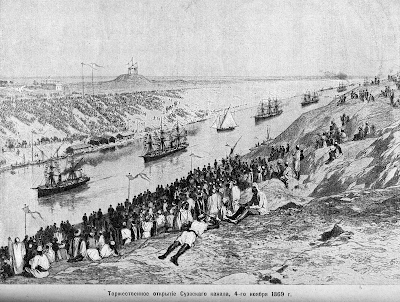
Panama Canal

The first pipeline was built in the US by Byron Benson in the US. The pipeline was 180 kilometer long:

"They had to surmount very significant and technical difficulties. First, no one had ever built a pipeline this wide. They proposed a 6-inch diameter of pipe. Second, they were building through the Allegheny Mountains which required going up and down very steep valleys and building in the total wilderness.", Britannica

This pipeline was build within one year from 1878 to 1879.

The construction of the Empire State Building is one of the most amazing success stories: With 443m height, it was the largest building in the world until 1971. The construction was done in 18 month from 1930 to 1931.

Empire State Building at construction time

The Manhattan Project in the 1940s managed to build a nuclear bomb — at a time when the scientific foundation of the field was not yet fully established — within three years. The Hoover Dam in the 1930's was finished in five years, the Golden Gate Bridge (built around the same time) in four. And it took the US eight years — from 1961 to 1969 — to put a man on the moon.
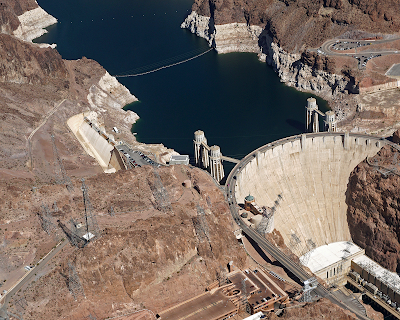
Hoover Dam

In Austria, the first Wiener Hochquellenleitung, the first Vienna Mountain Spring pipeline was built in the 19th century in four years. It had a length of about 100 km and the grand opening was done by Kaiser Franz Joseph I in 1873. The massive hydroelectric power plant, Kaprun, was built directly after the devastations of World War II, in eight years between 1947 and 1955. 
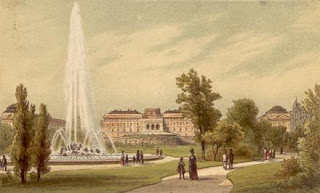
Fountain on Schwarzenbergplatz in 1873, where
Kaiser Franz Joseph celebrated the opening of the 
Vienna Mountain Spring Pipeline

And most impressively: during the 1970's, through the Messmer plan, France built 56 nuclear reactors within 15 years, many of which still deliver reliable and carbon-free electricity and are key to our energy survival this winter in Europe.
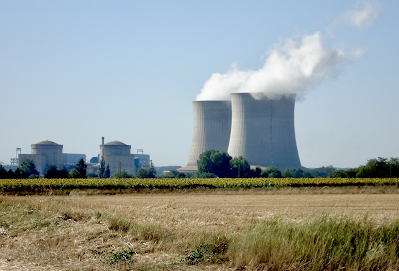
French Nuclear Power Plant

But surely we must be much faster today, given all the innovation we have achieved since?

China has indeed seen similar achievements more recently. The Three Gorges Dam was built in eight years, and the Hong Kong–Zhuhai–Macau Bridge, with a 55 km-length, the longest open-sea fixed link in the world, was built in nine years.
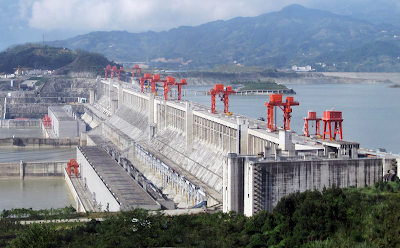
Three Gorges Dam

But when we look at the infrastructure and building projects of recent years in Europe and the US, the picture looks all but rosy. Just a handful of examples: the construction of Elbharmonie (a concert hall in Germany) took nine years to complete, and the cost exploded from €200 million to nearly €900 million. To put this into context: we needed the same time to build a concert hall, as our forefathers needed to build the Panama or Suez Canal. More importantly though, there are probably thousands of concert halls around the world to serve as precedence, whereas the Panama Canal was a construction unprecedented at the time.

Speaking of run-of-the-mill projects, take airports around the world: there are roughly 500 in France, Germany and the UK, 900 in Argentina, 14,000 in the US, even 17 in Antarctica. One would be forgiven for thinking we know how to build airports by now. And yet, the building of the Berlin airport took 14 years and created massive cost overruns. It is not even clear whether it can ever be operated economically. 

This is not only a German phenomenon: while we built the first mountain spring pipeline for Vienna of 100km length in the 19th century in four years, the Semmering-Basistunnel, a tunnel project in the mountains close to Vienna, with a length of 27km, is under construction since 2012 and is supposed to be finished in 2030, after 18 years of construction. When Finland undertook to extend one of its nuclear power plants, the Olkiluoto Block 3, the schedule and cost estimations were constantly overrun. Current estimates put its completion at this year (2022), after 17 years of construction. To put this into context: France built not one but 56 power plants in a shorter time.

In terms of energy supply we even seem to go backwards: opposed to the grand promises of “Energiewende”, Germany is burning more coal today than it did in the last years

Can these be dismissed as mere freak examples? A recent New York Times article suggests otherwise: 

  • The construction of the Honolulu rail transit with a length of 32 km started with an estimated cost of $125 million per km — $4 billion in total. And if this initial estimate in 2006 was not crazy enough for building a railway, the cost estimation now stands at more than $11 billion, with a planned completion by 2031. Should this estimation hold, it will have taken 25 years to finish a rail track of 32 km with a cost of  roughly $350 million per km.
  • In 2008, California started a high-speed railway construction to connect Los Angeles to San Francisco with  estimated costs of $33 billion. Construction was due to finish by 2020, in 12 years. Current estimates place the project completion in 2033 and the costs at $100 billion. 
  • The New York East Side Extension was planned to commence in 2006 and finish in 2011, with a budget of $2.2 billion. It now stands at $11 billion, with the completion estimated for December 2022.

Joseph Schofer, a Northwestern University civil engineer quoted in the article says »In the world of civic projects, the first budget is really just a down payment”, and Ronald N. Tutor, chief executive of Tutor Perini, a California firm that is building some of the nation’s largest projects, confirms that “All the major projects have cost and schedule issues”.

And as a last rather astounding example: in San Francisco the building of a public toilet was finally cancelled, after the planned toilet was estimated to cost $1.7 million.

Luckily the software world is all efficiency and innovation!

We could theorise that there is something particularly difficult about building infrastructure in the real world and that it becomes harder every day. But surely in the virtual world of software everything is fast, smooth and efficient, with one innovation overtaking the next. Or is it?

The term software crisis was coined in the 1960's and the situation has not improved since. Contrary to our perception that information and communication technology (ICT) is moving fast and reinventing itself all the time, this is not true behind the scenes. Just some examples for illustration. All of these issues are, on an engineering level, comparable to building the Golden Gate Bridge with such serious flaws that would cause it to collapse a year later: 

Not only do we suffer from a dramatic lack of quality in our ICT infrastructure,  but we are also facing enormous maintenance costs and a large number of failed IT projects. One of the largest failures in Europe in the last years (but by no means the only one) was the SAP transformation at Lidl which was terminated after €500 million were sunk in the project.

Such incidents occur frequently. The bottom line is: we do not seem to have our ICT systems or infrastructure projects under control, which leads to security issues, data breaches and — more to the point of this article — massive cost and schedule overruns within the IT projects, but also increasingly bleeding into other infrastructure projects.

Why this is of utmost importance

The capability to build essential infrastructure like railways, bridges or nuclear power plants quickly and in reasonable quality is fundamental for a modern society, especially one that is facing a number of severe challenges. Should we, for instance, have serious intentions to decarbonise our economy, we need one Messmer-plan-like nuclear build after the other. And that at least at the level of speed and quality that France delivered in the 1970's and 1980's. 

We have to move fast on multiple fronts: 

  • restructure our energy infrastructure
  • onshore manufacturing again 
  • de-globalise  supply chains to a certain degree
  • modernise agriculture by utilising biotechnology, vertical farming, etc. 
  • maintaining and rebuilding infrastructure that we have neglected for decades.

All these activities could be a net positive for our economies and environment, provided that they progress reasonably fast and efficiently.

While classic economic liberals and environmentalists usually do not have much in common, but many seem to share this idea, that we can quickly improve our situation through innovation, and the implementation of entirely unproven or speculative technology. One side might be thinking of machines that suck carbon out of the atmosphere and of creating economic growth by floating the market with innovations; the other of Rube Goldberg-like machines distributed over continents that allow wind and solar power to replace fossil fuels, and build a hydrogen economy along the way.

Both are betting on technology that is not yet available or entirely unproven. This bet is off the table, if our capabilities to innovate and even to build conventional infrastructure is not on par with expectations.

Contemplating  causes

While we huddle in teams, attend design-thinking workshops and run extensive stakeholder consultations to debate even the slightest risk that could in theory occur in any given undertaking, important progress and transformation in the outside world seem to be standing still, and real existential risk building up. Why is it, that we don't seem to be getting many important things done any more, at least not with reasonable efficiency?

I believe that there is — as in all complex problems — not a single cause, but a number of intertwined ones. I will try to outline some factors that I believe  to contribute substantially. Yet, please consider it not an exhaustive analysis , but rather a call for discussion. 

I would welcome any comments that agree or disagree with these observations. 

1 Digitisation Disappointment and General Stagnation in Research and Technology

I find it quite remarkable, even if this is not sufficiently discussed in public, that although digitisation was promised as a booster for productivity, the opposite seems to have happened. Several prominent experts have written and spoken about this phenomenon, among them Tyler Cowan, Robert Gordon, David Graeber, and Peter Thiel.

Robert Gordon remarks that productivity gains between 2004-2012 were on the lowest point since the end of the 19th century, which is remarkable, considering that this was the time when digitisation accelerated. 

Tyler Cowan writes:

“the low-hanging fruit has been mostly plucked, at least for the time being. […]  The Great Stagnation continues and indeed worsens, driven by an increasingly dysfunctional politics.”

Gordon's article and Cowan's book are both around ten years old, but not much seems to have changed since. The Covid pandemic and the current energy crisis only appear to have worsened the problem. Even before the crisis, other critics told the same story. Peter Thiel  in a conversation with Eric Weinstein in 2019 said:

“stagnation started in the late 1970s, with exception of digital technologies; even within Silicon Valley things seem to slow in the last 7 / 8 years” and “I don’t think the Truman show can go on for longer than a decade”

Until now the situation has not shown any signs of improvement. Even the anarchist activist and influential public intellectual David Graeber surprisingly seemed to agree with Peter Thiel's assessment, in his book Bullshit Jobs as well as in a discussion with Peter Thiel in 2020 (Where did the Future go?):

“the pace at which scientific revolutions and technological breakthroughs occur has slowed considerably since the heady pace the world came to be familiar with from roughly 1750 to 1950 […]  and in most wealthy countries, the younger generations can, for the first time in centuries, expect to lead less prosperous lives than their parents did.”

Finally, I would like to quote Nicholas Bloom, who describes the fast decline of scientific performance over the last decades:

“research effort is rising substantially while research productivity is declining sharply. […]  it takes around 13 years for research productivity to fall by half. Or put another way, the economy has to double its research efforts every 13 years just to maintain the same overall rate of economic growth.”

So, getting nothing done is also a phenomenon in science, albeit with a different spin. I assume that the stagnation we experience and described here is a contributing factor. I believe it is driven by two factors: (1) the low hanging fruit are plucked and new technology is much harder to come by and (2) we are experiencing a fast degeneration of research quality, hiring and promoting of scientists at universities due to bureaucratisation of research, massive flaws in science funding, and lack of critical exposure of scientists to the real world. 

“Academia has a tendency, when unchecked (from lack of skin in the game), to evolve into a ritualistic self-referential publishing game.”, Nassim Taleb

Sabine Kleinert and Richard Horton write in a Lancet commentary:

“There is clearly a strong feeling among many scientists, and not only Nobel Prize winners, that something has gone wrong with our system for assessing the quality of scientific research.”

This does not only lead to an increasing amount of irrelevant science and science of questionable quality, it also brings a massive overhead and waste of academic bureaucracy and funding infrastructure with it:

“European universities spend roughly 1.4 billion euros a year on failed grant applications—money that, obviously, might otherwise have been available to fund research. […]  I have suggested that one of the main reasons for technological stagnation over the last several decades is that scientists, too, have to spend so much of their time vying with one another to convince potential donors they already know what they are going to discover.”, David Graeber

2 Regulations, Bureaucracy and Focus Loss

It seems obvious that as a society we need to regulate certain technologies that can have dangerous effects, and harm the environment, economy or society. But over the decades, regulation and red tape have become more and more extensive with increasingly dubious results. Regulating complex topics is very hard, and rarely done well. Gerd Gigerenzer provides examples of financial regulations to illustrate this point:  

  • Basel 1 (1988): 30 pages, calculations could be done with “pen and paper”; 18 pages primary law in the US — was allegedly too simple
  • Basel 2 (1996): more than 300 pages (did not stop the financial crisis of 2008)
  • Basel 3 (2009): more than 600 pages; more than 1.000 pages primary law in the US; consequences of these regulations are hard to understand and require specialised firms

The idea that complex problems need overly complicated regulations seems to be a fundamentally flawed one. More and more complicated regulatory frameworks help large market players and keep startups out of the market, they also allow experts to find esoteric holes that can be exploited and are counter to the original intentions. Far from making things safer, they often make things more complex and less safe, slowing down progress dramatically.

“Indeed much of the work of investment banks in my day was to play on regulations, find loopholes in the laws. And, counter-intuitively, the easier it was to make money.”, Nassim Taleb, Skin in the Game

Marc Andreessen also talks about stifling stagnation and describes this phenomenon with the example of two major political projects of Richard Nixon's:  One was the creation of the Environmental Protection Agency (EPA) to regulate the environmental impact of corporations, and the other was Project Independence — the Nixon-era nuclear roll-out programme. Analysis showed back then what we also know today, that nuclear energy is the cleanest, safest and best technology for producing energy. Based on this, 1,000 reactors were supposed to be built until the year 2000 in the US. That did not happen. “We got the regulation and stagnation but not the reactors.” Andreessen concludes.

David Graeber describes in The Utopia of Rules stagnation in our society and progress, but also a more unexpected consequence — computers became amplifiers of bureaucracy:

“The Internet is surely a remarkable thing. Still, if a fifties sci-fi fan were to appear in the present and ask what the most dramatic technological achievement of the intervening sixty years had been, it's hard to imagine the reaction would have been anything but bitter disappointment.  […] 

Computers have played a crucial role in all of this. Just as the invention of new forms of industrial automation in the eighteenth and nineteenth centuries had the paradoxical effect of turning more and more of the world's population into full-time industrial workers, so has all the software designed to save us from administrative responsibilities in recent decades ultimately turned us all into part or full-time administrators.”

And finally Graeber writes in Bullshit Jobs:

“The most miserable thing about box-ticking jobs is that the employee is usually aware that not only does the box-ticking exercise do nothing toward accomplishing its ostensible purpose, it actually undermines it, since it diverts time and resources away from the purpose itself.”
and maybe very important for the considerations here:
“much of the reason for the expansion of the bullshit sector more generally, is a direct result of the desire to quantify the unquantifiable. To put it bluntly, automation makes certain tasks more efficient, but at the same time, it makes other tasks less efficient.”

So, did we use computers to automate the wrong things? To maximise distraction, support unnecessary bureaucracy while at the same time harming our capability to get things done?

3 Fear-driven Management and Juridification of Society

All this goes hand in hand with what I call the rise of fear or liability-driven management, which blossomed with the steady rise of the managerial / administrative class. In my experience there is often a substantial difference in decision making between founders/entrepreneurs and professional managers. The first group is deeply invested in their company, by definition holds in-depth knowledge (otherwise the company would not have survived) and makes active decisions, that is with mid- and long term prospects of the company in mind, driven by facts, taking risk. 

The managerial class on the other hand, more often than not, has a different priority: themselves. The question of management is reframed from: what is best for the company to how do I survive the next years while maintaining this salary and this position (or higher). As a consequence, decision making tends to be passive, risk-averse (as far as their own risk is concerned). This leads to an over-reliance on legal and professional consulting, which not only costs a lot of money but more importantly throws a spanner in the works.

“The final victory over the Soviet Union did not really lead to the domination of the market: More than anything, it simply cemented the dominance of fundamentally conservative managerial elites-corporate bureaucrats who use the pretext of short-term, competitive, bottom-line thinking to squelch anything likely to have revolutionary implications of any kind.”, David Graeber

Hand in hand with this trend of defensive and risk-avoiding decision making goes a juridification of society. As mentioned above, regulations get more and more complicated, old rules are hardly removed but new one are constantly added. As the Austrian lawyer Lukas Feiler explains in a talk:

“The interesting puzzle really is, how did we end up with such a complex legal landscape, when we all agree that it is simplicity what we would need. […] Moreover, politicians act on problems of the past. […] It is, as if politicians are driving a large truck by only looking into the rear mirror.”

So it seems, not only are we making our legal system unnecessarily complex, we also react to problems of the past, slowing progress down, while overlooking the actual risks of the future.

4 Specific Loss of Capability to Build Large Projects

And finally, after the more abstract considerations, we have witnessed a de-industrialisation of Western nations, which has even been lauded by pundits of different political affiliations. Market liberals saw it as an efficiency measure, and environmentalists were happy to get rid of heavy industry. The former did not consider that short-sighted efficiency measures had to be paid back with high interest rates in the future. The latter overlooked that we merely exported our polluting industry to other nations and more importantly, our know-how with it. If we don't maintain and build certain industries any longer, if we do not train new engineers, we will lose the capability to build related large projects.

The good news is that many of the successful and fast projects from the past were built without a lot of prior knowledge. So, with enough determination, there should be no reason why it should not be possible to quickly rebuild this capacity again.

As far as ICT is involved, we got entangled in a complexity trap. Over time, we improved our skills to make software, but we did not use these skills to build software better, but to constantly build more complex software that actually overburdened us. This is a serious problem, because software is the digital nervous system of our society and also of modern infrastructure. Having lost control over large parts of this digital infrastructure must have harmed large infrastructure projects in one way or another.

What next?

Firstly, I would like to test, debate and discuss the observations made in this article and would welcome your comments. Secondly, the fact that we experienced these achievements in the past shows that we are capable of building large infrastructure fast and reliably. We might have lost that now but a better understanding of the reasons could bring us back to where we were. This is the good news. The bad new is, if the Western world will not do it, other nations will, to our disadvantage. So as a next step, more concrete ideas have to be developed on how to improve the situation. I think solutions will have to consider the following aspects:

  • Ensure that managers and politicians have skin in the game
  • Reward risk taking to a certain degree, not defensive decision making
  • Decidedly remove unhelpful bureaucracy and red tape
  • Rethink science funding fundamentally
  • Aim for generic and simple, not complex and specific legislation (or rules in general, this also applies to corporate processes and the like)
  • Allow failure, iterate, while paying attention. Keep going and adjust with new learnings

Final Remarks and Possible Objections

One possible objection to this article could be that I am cherry picking examples. The examples I have found seem to be too common to dismiss as exceptions to the rule. The New York times article also points to the same findings. But if you believe otherwise I would be interested in receiving your comments. 

One could also criticise that the historic projects are not really comparable to modern ones, given that the working conditions during the construction of, for example, the Panama or Suez canal 100 or 150 years ago were certainly not up to modern labour-standards. Yet, even with complying with modern labour standards, shouldn't we be easily able to compensate the potentially slower progress of non-exploitative methods of working with supposedly vastly superior technology, equipment and computers?

It is also important to note one constraint in my selection of examples: I explicitly did not choose examples of modern undertakings that are especially innovative or have not been achieved so far (though hyped by some and dismissed by others), for example uploading the brain into the computer, colonising Mars, nuclear fusion power plants or the like. One could easily argue that these types of projects are inherently much harder than building a canal or a dam. 

In this article I am referring only to construction scenarios that we have done repeatedly in the past like dams, railway lines, bridges, opera houses and even nuclear power plants. For context, globally about 450 nuclear power plants are in operation today, and even more were built in the past or still under construction. So I chose infrastructure projects that are the opposite of new, and existing everywhere around us already.

One last note: The projects I have highlighted in this article were not selected because they are necessarily useful or ethical, but only for their engineering and management prowess.

Mittwoch, 26. Januar 2022

Der Mensch als Maschinenteil: Die sozialen Kosten falsch verstandener Automatisierung

Bari Weiss spricht in ihrem aktuellen Podcast mit Alex MacGillis über Automatisierung und die Folgen für die Arbeitswelt, vor allem auch in Folge der Covid-Krise. Die von vielen übersehene Folge der Automatisierung ist, dass sie zu einer stärkeren Standardisierung der Prozesse führt wobei sich die Menschen dabei immer mehr an die Prozesse der Maschinen anpassen müssen. Die Idee, dass uns Automatisierung »unwürdige« Arbeit abnimmt, stimmt also nur in bestimmten Bereichen.

Als Beispiel werden die Amazon-Warenlager in den USA genannt: die Menschen erledigen dort die Arbeiten, die nicht leicht durch Maschinen erledigt werden können, werden dabei aber in Wahrheit Handlanger der Maschine, Teil des Rädchens, das vom Computer ferngesteuert wird.

Dies ist durchaus kein Einzelfall. Die meisten Formen der Automatisierung und Digitalisierung drängt uns die Logik der Maschine auf. Das Smartphone wird nicht mehr von uns verwendet, wenn wir eine Information benötigen oder kommunizieren wollen, sondern wir werden vom Smartphone getriggert Dinge zu tun: Tweets oder Emails zu lesen, aufzustehen, laufen zu gehen, Termine wahrzunehmen sowie in welche Richtung wir gehen oder fahren sollen.

Scheduling Systeme von Unternehmen steuern die Angestellten immer exakter nach dem Bedarf, etwa im Einzelhandel, wie Cathy O'Neill in Weapons of Math Destruction beschreibt. Für die Betroffenen bleibt eine völlig unplanbare Welt, Familie und Privatsphäre sind zerrüttet, aber sie passen immer besser in die Prozesslogik.

Die Bedrohung der (falsch verstandenen) Automatisierung liegt also offensichtlich darin, dass wir die gesteuerten der Maschinen werden. Dies einerseits um »Effizienter« zu werden, andererseits, weil gesteuerte Individuen am besten vorherzusagen sind. Shoshanna Zuboff beschreibt diesen Prozess, der mit der Überwachung beginnt und bei der Kontrolle endet. Dies läuft, nach Zuboff in vier Schritten ab: (1) zunächst ein Übergriff: Systeme und Unternehmen greifen in unsere Selbstbestimmung ein, wie das zuvor nicht akzeptabel war, weil dies so schnell geht kommt es zu (2) Gewöhnung und (3) und dann (4) Neuausrichtung der Geschäftsmodelle.

Dazu kommt, wie Alec MacGillis feststellt, zu einer stetigen Verschiebung von Wohlstand von unten nach oben. Die Mittel- und Oberschicht werden von den immer stärker in Automatisierungszwänge gedrängte Unterschicht bedient. Diese Unterschicht hat dabei weder erfüllende noch gut bezahlte Jobs, und sind wie Maschinenteile austauschbar. Diese Unterschicht kommt auch immer weniger in Kontakt mit denjenigen, die sie Bedienen, sie es als Zusteller oder im Warenlager. Damit wird die Entwürdigung total.

War das die Vision der Automatisierung, die uns versprochen wurde?

Samstag, 14. November 2020

The long shadow of innovation, or: Lean digitisation and the car

 Inception of Technology

The inception of technology often runs through the following stages: luxury, wider adoption followed by systemic effects and finally this technology often becomes infrastructure and we become dependent from it. What once was fancy, a luxury eventually became a requirement for our life and for other processes in our society.

These steps can easily be followed with the car as with many other technologies (electricity, elevator, telephone, internet, etc.) Some of the systemic effects are predictable early on, many are not and need to be constantly monitored. A technology becoming infrastructure puts a huge burden on society: infrastructure is hard to change and usually expensive to maintain. This does not mean we should not build infrastructure, but we should be very careful what we add to our existing infrastructure and in which exact implementation. 

The Car

The car is an excellent example of a technology that was very badly steered in its inception, thus inflicted massive damage on societies. Instead of using the benefits of the car cleverly, we made large parts of our society dependent on it, severely damaged the social fabric in cities and villages, harmed the environment and living standards in the process. In some countries the situation is obviously much worse than in others. The US took a specifically bad route. Lee Vinsel et al describe this as

»the great American experiment of suburbanisation.« after the second world war. »They were, in the scope of human history, extremely low-density “towns,” and yet they also required more intense infrastructure: more roads, more sewer and water pipes, more utilities.«, Vinsel, Lee; Russell, Andrew L. The Innovation Delusion

The focus here is: more roads are needed, because everyone became heavily dependent on the car. They continue:

»the initial postwar suburban boom pales in comparison to what happened next. Beginning in the 1960s, white flight and other factors hollowed out the economically productive city centres throughout the country, leaving dead downtowns that were largely devoid of life outside business hours. Infrastructure has rotted in the so-called Rust Belt and in cities around the country where tax bases have evaporated.«

Dependency is unfortunately not linear but usually multiplies and creates webs of dependencies. Housing is dependent on the previous one(s): car, road, then follow electricity supply in the suburbs, food supply, etc. Once multiplied it gets harder and harder to correct these substantial mistakes. 

Parts of Europe did indeed a bit better – specifically cities – but not necessarily because we did more clever planning. Politicians were simply more bound by old city infrastructure and architecture. In plain words: the older and nicer, more social buildings, squares, architecture from the 19th century and before saved us to do the worst mistakes. Nonetheless, some politicians actually used the phrase car friendly city. What an absurd twist of facts: suddenly we have to accommodate technology not the other way round: take care of peoples needs and ask, how technology could help.

Today, many cities recognise that they took a very wrong turn and start to understand the damage this path inflicted on people. In some progressive cities like Amsterdam or Paris politicians try to undo (parts) of these mistakes. But as the car became (»webbed«) infrastructure, this turns out to be very costly and difficult – even in cities that are not as dependent on cars like cities in the US or some Asian countries .  

The bottom line here is this: it is much, much easier to introduce a new technology than to get rid of this technology again – after we became dependent. 

Digitisation on the brink of chaos

Now we stand on a similar junction with digitisation. Digitisation meaning: transforming formerly »analogue«, human driven processes to digital, computer based ones. 

With digitisation – as with many other innovations – we did not learn from past experiences with other technologies and severe mistakes we made there (on a structural, meta-level). We particularly did not understand how costly bad decisions can get over time. Now, thinking before acting is generally good advice. Doing what is technically feasibly, not matter what (and calling it innovation) – not so much.

Until recently, reasonable people who asked for slowing down a bit, to deliberate before jumping onto the next bandwagon where ridiculed. We (and I am saying intentionally »we«, because I am guilty myself) called them names like »Internetausdrucker« (old farts you print out the internet) etc. However, it turns out: slowing down things a bit is actually a bright idea.

Particularly as we start seeing the devastation that the move fast and break things ideology inflicted on our society. I am not going into details here, because these effects are discussed everywhere these days; just some hints: (a)social networks, monopolies we cannot fight any longer because they became more powerful than states, »disruptive« enterprises like Uber that never made a buck, but in the process destroyed hard fought rights of the poorest in a society, surveillance capitalism and many, many more. 

And we have not even seen the worst: long term effects of short term gains (for consulting agencies, »digitisation experts«, monopolies) turn out to be terrible. Why? As Vinsel et al correctly point out: innovation is (the starting point) everyone talks about. What is not talked about is: every technology we introduce into our world has to be maintained. Specifically when it becomes infrastructure as argued in the beginning. Now this is problematic enough, because in the digitisation projects usually only the short term gains and costs are argued for. It is forgotten that long term maintenance can become very expensive. By various reasons: for one, the overall complexity of the IT infrastructure is rising and complexity tends grows much faster than the benefits and faster than our means to keep up with it.

What makes things worse is that the implementation quality of many (read: most) IT systems is abysmal. This low quality of implementation multiplies the effects mentioned before. What we will see is: (1) long term dependence on systems that were introduced with not a lot of foresight in mind where (2) the costs will outnumber all benefits in mid term.

What was supposed to be efficient will turn out as uncontrollable pain in the ass. Or as Nassim Taleb put it astutely: 

»Most modern efficiencies are deferred punishments«

However, to be clear: most of us will be punished if we continue the current path, but a small minority (as we well know in our current economic condition) will collect the majority of the gains. 

Luddites!

I hear you say. No. It is not my point that we should throw all our digital systems out. It is s not to say that we cannot benefit from digitisation. We can, if we do it cleverly. But there is absolutely no time to loose to change the current path. To outline a few concrete aspects to consider for a lean digitisation in the future: 

  1. Digitisation is not a value per se.  It has to be well argued for. Don't do it because it is fashionable or your consulter tells you that you will miss the next disruption if you will not (and all others are doing it too (he tells them the same thing about you)). Were no clear and long term benefits can be reasonable argued, stay analogue, human.
  2. Innovation per se is nothing; Innovation essentially means: we introduced something new. Progress is what counts. Progress requires deep thinking and monitoring of the impacts of innovation. It has to be explicitly on the agenda. We have to ask the difficult questions, not evade them. Questions that ask for qualities not quantities.
  3. As far as software is concerned: Software is rarely isolated. If you develop software for a company, organisation etc., chances are, you will be part of a complex web of dependencies that tend to become infrastructure just by the fact that no one knows any more what is part of a process and what is not. This includes data dependency and process dependency. Hence Datensparsamkeit was only the first important idea. Dependency frugality (as I would call it) has to be the second. Be as independent as conceivable (e.g. never use cloud services of monopolists).
  4. We face deep knowledge loss, because knowledge that is embedded »in humans« and »analogue« processes gets captured in IT systems. Usually people operating these systems loose this knowledge quickly.  If not managed properly you will end up in a decade with a technical system that does something — arguably correctly, but you really don’t know — and no one in your Organisation can tell you any more what this system is doing. Combined with the usual bad engineering: good luck changing, migrating or even retiring this system. 
  5. We have to consider long term costs. In many cases it will turn out that long term costs will by far eat short term benefits.
  6. We face severe, possibly existential security risks in our current low quality but highly connected digital infrastructure.
  7. We most importantly have to consider maintenance of each innovation introduced, avoid innovation where maintenance is unclear (e.g. home automation)

These are just some bits and bobs that should be analysed more systematically and deeply to illustrate what should be done. 

The bottom line is: we can and should learn from past examples like the crude introduction of the car into our lives. What seemed like a good idea at the time turned out to be a terrible mistake. It will cost us dearly in the future to get rid of the car again in many places, survive the environmental and the systemic damages. We could have much more liveable cities, more resilient mobility and – indeed – the car for certain useful cases. We had the choice but did not take it. 

We (still) have the choice with digitisation. We can do it better, we can do lean digitisation, or clever digitisation, however you want to call it, or we can follow the current path. This will cost us a fortune in a few decades.

***

Addition on 29.11.2020 

In the last days an Amazon AWS datacentre had problems and a number of cloud services did not work properly any longer. The consequence? A large number of (US) web services did not work any more or not reliably because they were all dependent on this cloud service.

But not only web-services were affected: our modern digitisation is so driven by terrible architectural decisions (and demands from surveillance capitalists) that also door bells, thermostats and vacuums (among other devices) stoped working.

Incidentally, this is exactly the same point that Nassim Taleb is regularly making: volatility is not the problem. There is no systemic risk. The problem is idiotic concentration of services for pseudo-efficiency which makes the whole system fragile. We are transforming the internet – which was inherently resilient – into a fragil behemoth that risks our global digital infrastructure.

Addition on 17.12.2020 

It became clear that large parts of US (government) networks were hacked. To quote from the NYT article:

»The magnitude of this national security breach is hard to overstate.«

»The Russians have had access to a considerable number of important and sensitive networks for six to nine months.« 

 »The logical conclusion is that we must act as if the Russian government has control of all the networks it has penetrated.«

 To be clear: the fact that such a wide spread and devastating hack is possible is to a large extent the consequence of a very poor digitisation strategy and low execution quality. And it is certainly just to tip of the iceberg. 

Move fast and break things was finally successful: a lot of essential things are broken now. The more important answer was not given by Zuckerberg though: will we be able to repair this mess and who will pay for it? 

Addition on 28.02.2022 

The Russian war on Ukraine again stresses the point I tried to make two years ago. Over-reliance on actually unnecessary technology and the lack of alternate pathways — which are a fundament for resilience — celebrating simplistic efficiency, is getting back at us now. Let's learn from the damage as long as we still can: 

  • no unnecessary technology
  • the technology we deploy has to be well maintained
  • no single points of failure
  • no magic thinking (renewables will save our future etc)
  • no efficiency at the cost of resilience.

Dienstag, 4. August 2020

Warum wir WhatsApp nicht nutzen sollten

In Gesprächen im Freundes und kollegialen Kreis ist das Thema immer wieder auf soziale Netzwerke im allgemeinen und WhatsApp im besonderen gekommen. Obwohl des öfteren in kritischen Medien thematisiert ist vielen Nutzern nicht klar, warum es keine gute Idee ist WhatsApp zu verwenden. Ich möchte wesentliche Argumente in aller Kürze zusammenfassen:

(1) Inhalt vs. Metadaten

Ein häufiges Missverständnis ist, dass WhatsApp ja über eine (angeblich zuverlässige, s.u.) End-to-End Nachrichtenverschlüsselung verfügt und daher im Einsatz unproblematisch wäre. 

Nun ist längst bekannt, dass Geheimdienste, aber natürlich auch die großen Monopolisten des Überwachungskapitalismus (z.B. Facebook) in der Regel weniger Interesse an den konkreten Inhalten von Gesprächen haben als an den Metadaten. Was sind Metadaten? Wer kommuniziert zu welchem Zeitpunkt mit wem, wie lange?

Dies ist auch in allen Details in dem ausgezeichneten Buch von Edward Snowden – Permanent Record nachzulesen. Gerade diese Metadaten stehen aber trotz Verschlüsselung WhatsApp (und damit auch den US-Geheimdiensten) vollständig zur Verfügung.

(2) Eigentümer und Geschäftsmodell

In der heutigen Landschaft von IT-Dienstleistungen ist es von größter Bedeuten wer Eigentümer eines Dienstes ist und welches Geschäftsmodell dahinter steht.

Im Falle von WhatsApp ist dies Facebook. Facebook ist ein US-Unternehmen. Die USA können seit den »anti Terror« Gesetzgebungen nach 9/11 nicht mehr als Rechtsstaat im westlichen Sinne gelten. US-Geheimdienste können ohne die Möglichkeit eines Einspruches der Betroffenen von Unternehmen die Herausgabe beliebiger Daten fordern. Dies darf von den betroffenen Unternehmen und Managern nicht einmal bekannt gegeben werden.

Diese Gesetzgebung trifft natürlich auch Facebook und WhatsApp. Dazu kommt das äußerst fragwürdige Geschäftsmodell von Facebook, das im wesentlichen darauf beruht Nutzerdaten an Werbenetzwerke und andere Interessenten zu verkaufen und die Nutzer im Sinne der Kunden (also der Werbe-Partner) zu manipulieren. Details zu diesen Praktiken lassen sich bei Shoshanna Zuboff, Überwachungskapitalismus, nachlesen. Empfehlenswert dazu ist auch mein Gespräch mit Peter Purgathofer, Episode 24 von Zukunft Denken.

Facebook hatte bei der Übernahme von WhatsApp übrigens versprochen die WhatsApp-Nuterzdaten (auch in Zukunft) nicht mit den Facebook-Nutzerdaten zu integrieren und dieses Versprechen bereits gebrochen.

Kurz gesagt: Geschäftsmodell, Ort und Vertrauenswürdigkeit des Anbieters verbieten im Grunde eine Nutzung von WhatsApp.

(3) Ende-zu-Ende Verschlüsselung ist sicher?

Die Ende-zu-Ende Nachrichtenverschlüsselung galt nach Expertenmeinung als zuverlässig. Allerdings lässt sich Facebook kaum in die Karten schauen. Vertrauensvorschuss ist bei der mangelnden Seriosität des Unternehmens aber kaum gerechtfertigt.

Grundsätzlich lässt sich eine Implementierung jederzeit ändern und eine Hintertür – etwa für Geheimdienste – jederzeit einbauen. Die Tatsache, dass es von Seiten der offiziellen Stellen in den USA so wenig Kritik an WhatsApp gibt, legt für mich nahe, dass dies längst geschehen ist. Folgt man Edward Snowdens Beschreibung über  Umfang und Tiefe der US-Überwachung aller relevanter IT- und Kommunikaitons-Dienstleistungen, so kann man meines Erachtens nach das Vorsorgeprinzip walten lassen und davon ausgehen, dass WhatsApp ebenso vollständig überwacht ist.

Zusammengefasst: Die Ende-zu-Ende Verschlüsselung mag in einem technischen Sinne in der Vergangenheit glaubwürdig gewesen sein, dieses Argument ist aber für die aktuelle Nutzung nicht mehr relevant.

(4) Monopol-Situation und Lock-In

Nicht zuletzt scheint es aus demokratiepolitischer Sicht alles andere als wünschenswert zu sein die Kommunikation der Welt über das System eines Monopolisten abzuwickeln. Die Entwickler der E-Mail Protokolle hatten gute Gründe es so zu gestalten, dass es nicht nur bei einem Anbieter zu nutzen ist. Ein Messaging-System lebt vom Netzwerk-Effekt. Es wird umso wertvoller, je mehr Nutzer es verwenden. Dies führt zum Lock-In-Effekt. Ist ein System hinreichend weit verbreitet, wird es sehr schwer es abzulösen. 

Mittelfristig fügen wir aus meiner Sicht der Gesellschaft großen Schaden zu, wenn Kern-Kommunikationsinfrastruktur bei einzelnen (noch dazu fragwürdigen) Anbietern zentralisiert werden. Diese Anbieter haben damit jederzeit die Möglichkeit Umfang und Art des Dienstes zu verändern. Dies betrifft nicht nur das Abhören der Nachrichten oder Auswertung und Verkauf von Metadaten, sondern auch die Frage wie groß Gruppen sein dürfen, welche Endgeräte unterstützt werden, wie mit Daten umgegangen wird (z.B. Kompression oder Veränderung von Bild-Daten), ob bestimmte Länder oder Personengruppen inkludiert oder exkludiert werden, ob Werbung in die Kommunikation der Nutzer eingeblendet wird, oder ob gar die Kommunikation per se verändert wird (wie dies etwa auf Facebook geschieht) und viele andere funktionale Fragen.

Was ist die Alternative

Es gibt nur wenige Messenger-Dienste, die als wenig problematisch gelten. Signal wird häufig als solches System genannt. Allerdings möchte ich auch Signal nur mit Einschränkungen empfehlen. Zwar ist es im Gegensatz zu WhatsApp ein offenes System, aber dies löst das Problem der Zentralisierung nicht.

Weiters ist die Nutzung von SMS natürlich nach wie vor eine Option, und sicher eine bessere als WhatsApp.

Nicht zuletzt ist E-Mal nach wie vor eine der besten und offensten Kommunikationsformen die wir haben. Leider mangelt es hier in der Regel and Ende zu Ende Verschlüsselung.

Wie so oft gab es in der Vergangenheit Systeme, die konzeptionell den heutigen weit überlegen und offen spezifiziert waren, man könnte etwa Jabber nennen. Leider haben diese Systeme nie die primäre Nutzerfreundlichkeit von WhatsApp oder Signal erreicht und können daher heute aufgrund der geringen Verbreitung und wenig nutzerfreundlichen Schnittstellen nicht mehr als Alternative empfohlen werden.

Zum Abschluss...

Es freut mich, dass Sie sich die Zeit genommen haben, mein Blog zu lesen. Natürlich sind viele Dinge, die ich hier diskutiere aus einem subjektiven Blickwinkel geschrieben. Vielleicht teilen Sie einige Ansichten auch nicht: Es würde mich jedenfalls freuen, Kommentare zu lesen...

Noch ein Zitat zum Schluß:

"Ich verhielt mich so, als wartete ein Heer von Zwergen nur darauf, meine Einsicht in das Tagesproblem, zur Urteilsfindung von Gesellschaft und Politik zu übersetzen. Und nun stellt sich heraus: Dieses Heer gibt es nicht.

Ganz im Gegenteil erweist sich das kulturelle Getriebe als selbstimmunisierend gegen Kritik und Widerlegung. Es ist dem Lernen feind und wehrt sich in kollektiver Geschlossenheit gegen Umdeutung und Innovation.", Rupert Riedl, Evolution und Erkenntnis, Piper (1985)

:-)