Posts mit dem Label Zukunft werden angezeigt. Alle Posts anzeigen

Mittwoch, 13. August 2025

The Destructive Force of Unchecked Intellectuals

“"public action" and "legal steps" were needed to prevent XXX." Such steps should be "dictated by science and not by political expediency,"”

Who does not recognise this pattern? Every other day someone tells us we have to “follow science” and listen to this or that expert. It has to be done as quickly as possible, because the science (or expertise) is clear and further deliberation not required.

So, what could XXX be? Described by Thomas Sowell in Knowledge And Decisions this is an example that is about 100 years old. In this case it is: "the "decline of American intelligence." 

1930s exhibit of the Eugenics Society

It was the pressure of intellectuals about 100 years ago to implement their recent fashionable idea: eugenics. Let's decide who is supposed to procreate and who is not. Who decides? Obviously the infallible experts and scientific counselers.

Sowell describes the general pattern that can be observed when intellectuals try to achieve political relevance:
(1) the almost casual ease with which vast expansions of the amount and scope of government power were called for by intellectuals to be used against their fellow citizens and fellow human beings, for purposes of implementing the intellectuals' vision,
[…]

(2) the automatic presumption that differences between the current views of the relevant intellectuals ("experts") and the views of others reflect only the misguided ignorance of the latter,
[…]

(3) the confidence with which predictions were made, without reference to any prior record of correct predictions nor to any monitoring processes to confirm the future validity of current predictions,
[…]

(4) the moral as well as intellectual superiority that accompanied the implicit faith that the current views of the "experts" represented
[…]

(5) a concentration on determining the most likely alternative conclusions rather than whether any of the conclusions had sufficient basis to go beyond tentative cognitive results to sweeping policy prescription.


Samstag, 9. August 2025

Totalitarian Leanings

Ask yourself which party or organisation is showing totalitarian leanings in your country. All quotations from the excellent book by Thomas Sowell, Knowledge And Decisions:


It is not simply the origin or basis of political power that defines totalitarianism, nor even the amount of power or its ruthless application. A tyrant is not automatically a totalitarian. It is the political blanketing of the vast range of human activities-from intimate personal relations to philosophical beliefs-that constitutes "totalitarianism."

[…] 

The founder of fascism and originator of the term "totalitarianism," Benito Mussolini, summed it up: "All through the state, all for the state, nothing against the state, and nothing outside the state."' Totalitarianism "recognizes the individual only insofar as his interests coincide with those of the State."

[…] 

Totalitarian ideology typically features 

(1) the localization of evil-in Jews, capitalists, or some other group-so that comprehensive political solutions to age-old human problems seem feasible within a reasonable time horizon by surgically removing the offending group, leaving a healthy body politic intact, 

(2) the localization of wisdom, to explain why this miraculous cure has escaped so many minds for so many centuries, as well as explaining the necessity for superseding democratic institutions and beliefs, 

(3) a single scale of values by which priorities may be arranged in every field of human endeavor, to be achieved "at all cost," 

(4) the presupposition of sufficient knowledge to achieve whatever goal may be projected, 

(5) the urgency of the "problem" to be "solved" so that ruthlessness is the lesser of two evils, and 

(6) a psychic identification with millions, whose opinions may nevertheless be disregarded and whose lives may be sacrificed in the cause, without feelings of guilt.

[…] 

Finally, the totalitarian ideology must be a self-enclosed sys tem, to exclude alternative views and visions which are-regardless of their substance-inherently antithetical to a single totalitarian ideology.


Montag, 6. Mai 2024

Economic Predictions and the Future

Tyler Cowen briefly reviews an economic book from the 1980 with contributions by Nobel laureates of the time.

How did the predictions pan out? Well, as to be expected: they wrote about issues that have little relevance now and overlooked practically all topics relevant today.

“the book stoked my fears that today’s economists and analysts do not have a good handle on America’s imminent problems.”
Bottom line, over, and over again: Predictions of experts are worth very little in the real world. Unfortunately, or maybe fortunately? The future is unclear and open.


Donnerstag, 11. April 2024

Veganes Buffet auf der Titanic

Die Titanic ist auf einen Eisberg gelaufen. 

Der Kapitän ruft eine Krisensitzung mit allen Offizieren sowie führenden Vertretern der ersten Klasse ein. Der Konflikt eskaliert: Es ist dem Koch immer noch nicht gelungen, vegane Speisen am Buffet zu servieren.

Die Passagiere der zweiten und dritten Klasse sind schockiert. Wie konnte es passieren, dass das technische Wunder Titanic, gebaut und gesteuert von der Elite ihres Landes, gerade sinkt?

Titanic, Zeichnung von Willy Stöwer (1912)

Die Krisensitzungen gehen weiter. Es wird über einen letzten möglichen Kompromiss verhandelt: Ist ein vegetarisches Buffet eine zwischenzeitlich akzeptable Lösung?

Indessen richten sich die verbleibenden Fahrgäste der ersten Klasse in den Rettungsboten ein und sorgen dafür, dass Champagner, Quinoa Bowls und hinreichend Karotten-Sticks als Proviant eingepackt werden. 

Die Schlüssel für die Quartiere der zweiten und dritten Klassen in den Unterdecks konnten nicht mehr rechtzeitig gefunden werden. Es hätte auch nicht genug Rettungsboote gegeben. Insofern konnte eine unangenehme Auseinandersetzung vermieden werden. 

Am Ende steht eine gute Nachricht: Die geistige und kulturelle Elite wird sich retten können. So bleibt die Hoffnung, das Buffet-Problem am nächsten Ozeandampfer zu lösen!

***

Ein nie veröffentlichter Untersuchungsbericht zeigt Monate später: In den Stunden, bevor die Titanic mit dem Eisberg kollidiert ist, waren alle Offiziere in Buffet-Verhandlungen mit Passagieren. Am Steuer war der Schiffsjunge, der zuvor noch nie einen Ozeandampfer geführt hat.

Nach einer Klage, die über zwei Jahre dauert, gelingt es einem pensionierten Journalisten, den Bericht der Kommission zu erhalten:

🀫🀫🀫🀫🀫🀫🀫🀫🀫🀫🀫🀫🀫🀫🀫🀫🀫🀫Titanic 🀫🀫🀫🀫🀫🀫🀫🀫🀫🀫🀫🀫🀫🀫🀫🀫🀫🀫🀫🀫🀫🀫 Eisberg🀫🀫🀫🀫🀫🀫🀫🀫🀫🀫🀫🀫🀫🀫🀫🀫🀫🀫🀫🀫🀫🀫🀫🀫🀫🀫🀫🀫🀫🀫🀫🀫🀫🀫🀫🀫🀫🀫🀫🀫🀫🀫🀫🀫🀫🀫🀫🀫🀫🀫🀫🀫🀫🀫 Krisensitzung🀫🀫🀫🀫🀫🀫🀫🀫 Kapitän 🀫🀫🀫🀫🀫🀫🀫🀫🀫🀫🀫🀫🀫🀫🀫🀫🀫🀫🀫🀫🀫🀫🀫🀫🀫🀫🀫🀫🀫🀫🀫🀫🀫🀫🀫🀫🀫🀫🀫🀫🀫🀫🀫🀫🀫🀫🀫🀫🀫🀫🀫🀫🀫🀫🀫🀫🀫🀫🀫🀫🀫🀫🀫🀫🀫🀫🀫🀫🀫🀫🀫🀫🀫🀫🀫🀫🀫🀫🀫🀫🀫🀫🀫🀫🀫🀫🀫🀫🀫🀫🀫🀫🀫🀫🀫🀫🀫🀫🀫🀫🀫🀫🀫🀫🀫🀫🀫🀫 Rettungsboote 🀫🀫🀫🀫🀫🀫🀫🀫🀫🀫🀫🀫🀫🀫🀫🀫🀫🀫🀫🀫🀫🀫🀫🀫🀫🀫🀫🀫🀫🀫🀫🀫🀫🀫🀫🀫🀫🀫🀫🀫🀫🀫🀫🀫🀫🀫🀫🀫🀫🀫🀫🀫🀫🀫 Passagiere 🀫🀫🀫🀫🀫🀫🀫🀫🀫🀫🀫🀫🀫🀫🀫🀫🀫🀫🀫🀫🀫🀫🀫🀫🀫🀫🀫🀫🀫🀫🀫🀫🀫🀫🀫🀫🀫🀫🀫🀫🀫🀫🀫🀫🀫🀫🀫🀫🀫🀫🀫🀫🀫🀫 gerettet🀫🀫🀫🀫🀫🀫🀫🀫🀫🀫🀫🀫🀫🀫🀫🀫🀫🀫🀫🀫🀫🀫🀫🀫🀫🀫🀫🀫🀫🀫🀫🀫🀫🀫🀫🀫🀫🀫🀫🀫🀫🀫🀫🀫🀫🀫🀫🀫🀫🀫🀫🀫🀫🀫  

Samstag, 6. April 2024

Revolution is Coming...

Revolution is Coming 

»Wir müssen uns hier für einen Augenblick in die Zeit unmittelbar vor der Unterdrückung der Demokratie und der Einführung des totalitären Regimes zurückversetzen. Dieses Stadium wird beherrscht von dem allgemeinen Verlangen nach schnellem und entschlossenem Handeln der Regierung und von der Unzufriedenheit mit dem langsamen und schwerfälligen demokratischen Geschäftsgang, was dazu führt, daß ein Handeln unter allen Umständen gefordert wird.«


I am not a biologist 

»Das Volk wird dahin gebracht, seine Anhänglichkeit an die alten Götter auf die neuen zu übertragen, indem behauptet wird, die neuen Götter seien in Wahrheit das, was sein gesunder Instinkt ihm zwar immer gesagt, aber was es vorher nur unklar erkannt hätte. Die erfolgreichste Technik zu diesem Zweck besteht darin, die alten Worte beizubehalten, aber ihren Sinn zu ändern. Wenig Merkmale der totalitären Regimes verwirren den oberflächlichen Beobachter so sehr und sind gleichzeitig so charakteristisch für die ganze geistige Atmosphäre wie die völlige Verdrehung der Sprache und der Bedeutungswandel der Wörter, in denen die Ideale des neuen Regimes zum Ausdruck gebracht werden.«


Trigger Warning!

»Das Volk wird dahin gebracht, seine Anhänglichkeit an die alten Götter auf die neuen zu übertragen, indem behauptet wird, die neuen Götter seien in Wahrheit das, was sein gesunder Instinkt ihm zwar immer gesagt, aber was es vorher nur unklar erkannt hätte. Die erfolgreichste Technik zu diesem Zweck besteht darin, die alten Worte beizubehalten, aber ihren Sinn zu ändern. Wenig Merkmale der totalitären Regimes verwirren den oberflächlichen Beobachter so sehr und sind gleichzeitig so charakteristisch für die ganze geistige Atmosphäre wie die völlige Verdrehung der Sprache und der Bedeutungswandel der Wörter, in denen die Ideale des neuen Regimes zum Ausdruck gebracht werden.«

»Freiheit ist keineswegs das einzige Wort, dessen Bedeutung ins Gegenteil verkehrt worden ist, damit es zum tauglichen Instrument der totalitären Propaganda wird. Wir haben schon gesehen, wie dasselbe mit den Wörtern Gerechtigkeit, Gesetz, Recht und Gleichheit geschieht. Diese Liste könnte so lange fortgesetzt werden, bis sie fast alle gebräuchlichen Ausdrücke der Moral und der Politik umfaßt

»Und diese Konfusion wird nur immer schlimmer, weil der Bedeutungswandel in der politischen Terminologie nicht ein einmaliger Vorgang, sondern ein fortdauernder Prozess, ja, eine Technik ist, die bewußt oder unbewußt zur Gängelung des Volkes benutzt wird. Nach und nach wird im Verlaufe dieses Prozeßes die ganze Sprache geplündert, und schließlich werden die Wörter zu leeren Gehäusen ohne feste Bedeutung, so daß man mit ihnen auch das Gegenteil bezeichnen kann und sie nur noch zum Ausdruck der Gefühlsassoziationen gebraucht werden, die mit ihnen einhergehen.«

Im Versuch, die Sprache bis ins Kleinste zu regulieren hat die Stanford Universität (sic!) im Jahr 2022 ein Dokument herausgegeben, das hunderte Begriffe in zehn Kategorien umdefiniert. Erst vor wenigen Jahren wurde gefordert, »problematische Inhalte« mit »Trigger Warnings« zu versehen. Alles, was potenziell irgendjemanden verstören könnte (an einer Universität!) sollte mit einer Warnung vorweg versehen werden. Nun stellt sich heraus, dass selbst das Wort Trigger Warning etwas triggern könnte und ist selbst wieder zu ersetzen, durch Content Warning. Zu Beginn dieses Dokumentes gibt es selbst eine Trigger — Verzeihung — Content Warning über das eigene Dokument, denn die Worte, die erklärt werden können, offenbar großen Schaden anrichten. Dieses Dokument hat die Absurdität so auf die Spitze getrieben, dass es letztlich, nachdem es von Medien aufgegriffen wurde, in dieser Form in Stanford nicht umgesetzt wurde. Das bedeutet nicht, dass derartige Richtlinien nicht an zahlreichen Universitäten und Behörden zum Standard geworden sind. 

Ziele und Mittel 

»Wenn das Volk rückhaltlos hinter der Gesamtpolitik stehen soll, dann muß es davon überzeugt werden, daß nicht nur das Ziel, sondern auch die dafür eingesetzten Mittel die richtigen sind.«

Björn Lomborg und andere kritisieren regelmäßig die Mittel, die eingesetzt werden, um das Problem des Klimawandels zu adressieren. Wer aber die Mittel kritisiert, wird zum Leugner des Problems (und auch gleich zum Frauenfeind) erklärt.

Kriegswirtschaft 1940 und 2024

»Am meisten muß uns vielleicht die Tatsache alarmieren, daß die Verachtung für die geistige Freiheit nicht erst auftritt, nachdem das totalitäre System errichtet worden ist, sondern überall unter Intellektuellen zu finden ist, die sich einem kollektivistischen Glauben hingegeben haben und als geistige Führer sogar in solchen Ländern gelten, die noch immer unter einem liberalen Regime leben.«

Heute schlägt die deutsche Journalistin Ulrike Hermann unverblümt vor, in eine »Kriegswirtschaft« und damit eine Planwirtschaft zu wechseln, weil das vermeintlich die Probleme der Zeit lösen soll und erreicht damit bemerkenswertes Echo in Teilen der »intellektuellen« Elite. 

»Die deutsche Autorin Ulrike Herrmann prophezeit den Untergang des Kapitalismus und stellt die Gesellschaft vor die Wahl: Chaos und Katastrophen – oder ein sofortiger Übergang zu Kriegs- und Kreislaufwirtschaft.«, NZZ (2023); weiters: Blätter (2022); SWR (2023)

Referenz

Alle Zitate in diesem Artikel stammen, sofern nicht anders gekennzeichnet, aus dem herausragenden Buch  Friedrich A. von Hayek. Friedrich Hayek - Der Weg zur Knechtschaft aus dem Jahr 1945!

Samstag, 11. November 2023

Modell oder Szenario?

Modelle werden heute in allen möglichen Kontexten zur Entscheidungsfindung oder -unterstützung eingesetzt, denken wir an Klimamodelle, Covidmodelle, Wirtschaftsmodelle usw.

Von Experten, die tatsächlich etwas von Modellierung verstehen, wird dabei immer wieder betont, dass es sich dabei um Szenarien und nicht um Vorhersagen handelt. Ich habe diese Themen schon mehrfach im Podcast behandelt, mehr dazu etwa in der Episode mit Andreas Windisch oder Erica Thompson.

Diese Unterscheidung ist extrem wichtig, weil Modelle auf Annahmen unterschiedlicher Art aufbauen und daher selten die Zukunft zuversichtlich vorhersagen. Nun bin ich in einem Spectator-Artikel auf ein sehr interessantes Zitat gestossen, dass diese Überlegungen in ein recht anderes Licht rücken, und wieder zeigen, dass (gesellschaftliche) Realität oft sehr stark von den Ideen und Annahmen unserer Eliten abweichen. Bei einer Konferenz der Royal Society macht Prof. Steven Riley (UKHSA) folgende sehr wesentliche Bemerkung: 

“We can’t redefine commonly used words. If we have a chart that’s got a time axis and the time axis goes past the current day and there’s a line going off to that side of the chart then we are making forecasts. Whether we like it or not.”

»Wir können allgemein genutzte Worte nicht neu definieren. Wenn wir eine Abbildung machen, die eine Zeit-Achse hat, und diese Zeit-Achse weist vom heutigen Tag in die Zukunft, und es gibt eine Linie auf dieser Abbildung die in die Zukunft weist, dann machen wir eine Vorhersage. Egal, ob wir das wollen oder nicht.« 

Donnerstag, 24. August 2023

Understanding or Solving?

“In the academic world of the social sciences, research designed to understand a problem is often held in higher regard than research to solve the problem. […] it is based on the false assumption that understanding a problem is the key to solving it. This is not true for the toughest problems, the “wicked” ones,”, Daniel Yankelovich, Wicked Problems, Workable Solutions

“The Fallacy of Exquisite Measurement, which states that the ability to measure things down to very fine detail does not automatically confer a power to control things.”, James Howard Kunstler, Living in the long emergency


Freitag, 23. Juni 2023

Existential Threats

What is an existential risk? The Cambridge Existential Risks Initiative (CERI) uses the following definition:

“An 'existential risk' (x-risk) is an event that could permanently and drastically reduce humanity’s potential, for example by causing human extinction.”, CamXRisk

A problem with discussing existential risks is that the definitions or understandings of it are quite ambiguous. Also, the Cambridge definition has a weakness. What does drastically mean specifically? 

I would try my own definition:

An existential risk to humanity is a threat that could damage large parts of the planet or human structures or kill  large parts of humanity to an extent or in a way, that a recovery to modern levels of society is not likely within a timeframe of a centuries.  

Every definition has its weaknesses, but I think we have a working understanding of what we are talking about. Of course, even if an existential threat does not go the full way, say we would face a nuclear exchange that is limited to Europe, the effects on the global society might not be existential in the narrow sense of the meaning but still very dramatic. Lastly, we have to keep further parameters in view, such as timeframe (how fast does the risk play out once it happens) and range of effects (how far-reaching is the effect, e.g. does it hit “only” humanity, or the whole global ecosystem).


Now having the definition game out of the way, what existential risks are out there, can we list and maybe even rank them? Or does a ranking of existential threats make no sense at all?  Existential means, (1) huge consequences when the worst case happens and evidently also (2) it did not happen yet, at least not to our modern society. That means, we have no proper statistical basis to draw reliable conclusions from. A ranking could be based on probabilities of entry and severity of effect. But as we do not have sufficient data from prior cases for that reason, probability of entry are very vague and usually just guesses. The same is true for the severity of the effect. As Niall Ferguson writes:

“A pandemic is made up of a new pathogen and the social networks that it attacks. We cannot understand the scale of the contagion by studying only the virus itself, because the virus will infect only as many people as social networks allow it to. At the same time, a catastrophe lays bare the societies and states that it strikes”

This is not only true for pandemics, but for other societal and potential existential risks as well. To estimate the effect of an existential risk thus means (1) we have to understand the mechanic of the risk very well and (2) how societies react to it. For that reason, the situation can be counterintuitive in numerous instances. For instance, climate changes and yet predicted (and reported) effects do not actually happen:

“annual US deaths from tornadoes have fallen by more than a factor of ten since 1875” 

or extreme weather events might increase in some places and still:

“weather-related death rates fell dramatically during the past one hundred years even as the globe warmed 1.2°C (2.2°F); they’re about 80 times less frequent today than they were a century ago. That’s largely due to better tracking of storms, better flood control, better medical care, and improved resilience as countries have developed. A recent UN report confirms the trend over the past two decades.”, Steven Koonin, Unsettled

Of course, this could change significantly should we come into a runaway situation, which some climate scientists are afraid of but others dispute. The bottom line is: we usually know much less about the mid or long-term outcomes of complex systems than we think we do.

So, any ranking of existential risks tends to be a fools' errand. Thus, in my list the ranking is not to be taken too seriously, but it is not entirely negligible. For instance,  nuclear weapons are number one for a good reason: There is a reasonable chance for a full nuclear exchange, and the consequences are absolutely catastrophic, mitigation and adaptation are minimal, and all that happens in a very short timeframe. Whereas population collapse is a significant threat for our society and there is little room for mitigation, but plays out over decades or centuries, and we can hope for adaptation measures. Climate change is in between, and actually very similar in its mechanic: there is not a lot we can actually do to mitigate, especially in a short time frame, and the effects will most likely play out over long periods of time, which again, opens room for adaptation. But the effects are wider ranging than population collapse, in that the whole biosphere is effected.

These are the reasons why climate change is not in the top five in my list. It is not one event, it is gradual and adaptation much more likely than a nuclear war. Other large humanitarian problems like hunger, poverty or malaria are not on that list either. These, and many others, are terrible threats to human flourishing in parts of the world but are not threatening humanity in a larger or long-term sense. They are rather effects of other problems. Again, this does not mean, we should not do anything against those, but it is simply not the focus of this discussion.

Systemic aspects of most existential threats forbid a naive reading, in the sense, that we should work the list from top to bottom and only continue to “the next action item” once we have completed the previous. In fact, the most fundamental insight is, that there is not one “biggest problem”, not even three or five. Living in a modern, complex society — in the Anthropocene — has positive effects:  we are farther away from nature, safer and with much higher living standards than ever before. We do not die any longer in harmony with nature, as Hans Rosling put it. But it also has negative effects which can be, unfortunately, existential. Many, if not most, of the threats on this list are connected in complex ways. This means, we most likely cannot solve any of those, especially not in isolation. But it also means that we got our priorities wrong in the last decades. 

»We are always well prepared for the wrong disaster. […] But history warns us that you don’t get the disaster you prepare for.« , Niall Ferguson

and

“For every potential calamity, there is at least one plausible Cassandra. Not all prophecies can be heeded. In recent years we may have allowed one risk — namely climate change — to draw our attention away from the others.”

Also, as mentioned above, some threats are on the list are not isolated but can be seen as a potent trigger for other threats, e.g. political extremism or collapse of infrastructure.

Thus, focusing on the mitigation of one risk alone (e.g. climate change), can dramatically increase other risks, as each medication has side effects. Would we, for instance, Just stop oil, this would be a guarantee of an existential disaster for humanity. Often, we did not only get the priorities wrong, but our activities were so inept that they, in fact, increased the risk they were supposed to mitigate and also negatively affected many other risks, especially the ones higher on the list. 

Not focusing our attention on one risk alone is clearly not easy considering the dominating mode of (legacy) media and politics. But it is like not smoking to stay healthy, while at the same time driving a motorcycle and doing wingsuit jumps from mountains. Whatever we do should be a wide-ranging approach, trying to make our society more resilient against various risks, for instance: 

  • Increasing diversity (in supply chains, food production, energy systems, ...).
  • Providing redundancy for important services (grid replacement part agains Carrington events, emergency hospital beds, etc).
  • Preparing for catastrophes with emergency management, properly funded military, etc.
  • Decoupling (for instance financial services), so that a catastrophe in one country does not immediately spill over to others.
  • Creating smaller decoupled, redundant structures that organise bottom up, not heavyweight top down ones.
  • Making societies more wealthy and educated in general helps the society to be better adapted to critical events. This clearly stands in opposition to the ideas of many “progressives”.
  • Try to estimate the positive effects of an intended measure per Euro spent instead of following ideology-driven activities.

One example, where we failed in an embarrassing way and saw our near total lack of preparation is the Covid crisis, to just mention a few aspects:

  • Even though pandemics of this type happened in the past and were predicted by experts, we had no proper studies, which emergency measures would be actually helpful (and even three years later the knowledge is scarce). 
  • We had no PPE stocked in reasonable quantities, not even for medical personel.
  • We had not even crisis processes defined. In the middle of the first lock down, I followed a discussion in German media, where experts were contemplating, where infected people should do. Should they go to the general practitioner or not, to the hospital, etc? 
  • We had no clear and unifying reporting framework established, and even years into the pandemic the data quality was bad.
  • We had no prepared plan how to come to reasonable conclusions quickly, which actions to take (virologists are not the only experts that have a say in a pandemic).

All of these preparations would not have been expensive at, especially considering the cost the lack of preparation inflicted on our society and the fact that we had people whose job it was to do just that.

I think we can create a much more resilient society and mitigate some of the risk, and adapt to others — maybe shift them from existential to problematic, so to speak. Now to come to a suggested list of existential threats with a vague prioritisation subject to what was said before:

  1. Nuclear weapons, voluntary and especially also  involuntary deployment (as we had a very close shave more than once)
  2. Natural or engineered pathogens leading to pandemics — especially considering the recent developments in synthetic biology
  3. Collapse of critical infrastructure (or multiple infrastructures in a domino effect, e.g. ICT failure or attack on ICT triggering energy problems, or financial services supply chains, etc.) that supports or modern society due to human errors or complexity spinning out of control, such as
    • energy infrastructure (e.g. way too little supply of fossil fuel in the next decades; large scale collapse of grids)
    •  global financial system
    •  ICT
    •  supply chains
  4. Solar Superstorm (also called a Carrington Event) which could destroy large parts of modern electrical infrastructure at once. It happened already in the past, for instance in the year 1859 (where the damage was limited for obvious reasons), but we also had a close shave in July of 2012. Also insurances describe that risk, for instance Lloyds:
    • “A Carrington-level, extreme geomagnetic storm is almost inevitable in the future.”
    • “The total U.S. population at risk of extended power outage from a Carrington-level storm is between 20-40 million, with durations of 16 days to 1-2 years.”
  5. Run away automation / robotic (»AI«, but on a more general level), especially in combination with one of the other risks on the list;
  6. Climate change (especially in the case that tipping points and runaway climate change occur)
  7. Nanotechnology or other ways of dramatically changing manufacturing and chemistry leading to nanomachines
  8. Population collapse is an existential threat in slow motion; “Will civilisation end with a bang or with a whimper? It is currently trending to end with a whimper in adult diapers.”, Elon Musk
  9. Ecosystem collapse, biodiversity catastrophe / “global domino effect”
  10. Unknown unknowns
  11. Green Genetical Engineering gone wrong
  12. Political/religious extremism (probably not per se, but in combination with or as a trigger of other factors mentioned above, e.g. nuclear weapons, bioweapons, etc.)
  13. Asteroid impact on Earth (which is so low on the list, because of the assumption, that we should be able to detect this threat early enough and mitigate it)
  14. Geoengineering accident

This list is thought as an encouragement to discuss this issue. Is the order correct? Probably not. Is something missing? I researched for a time to come up with that list, still, most likely I forgot something. This is also why one article focuses on unknown unknowns. This is important. As our knowledge is very limited, it appears to be much wiser to prepare our society for impacts of different types, as mentioned above. 

But is the idea of existential threat actually credible? Some pundits say that eventually humanity turned out to be more resilient than we believed at times (see also  Apocalype Always).  But I think it is short-sighted and such hand-weaving comments are problematic. It seems to be difficult to argue that e.g. nuclear weapons are not an existential threat. Just because someone played Russian Roulette six times and did not die, does not make it a save pastime. 

The confusing fact that nuclear weapons also (most likely) avoided world war three in the past indicates how complex the situation is. Mutual assured destruction, on the one hand, might have avoided a war, but should it still come to a war — even due to technical or human error, as we have seen in the past — it would be, well, mutually destructive. There is no way around it. 

And this paradox seems to be a common attribute of many modern technologies, which seem to make the edge between benefit and catastrophe ever sharper. So we are well advised to take these threats seriously. But to reiterate a point, I made in the beginning: it is a major mistake to mostly focus on one threat in this list and believe we can reduce our societal risk. 

We will not. 

Montag, 15. Mai 2023

Wissenschaft — Institutionalisierter Confirmation Bias?

In wesentlichen Bereichen der Forschung gehen heute junge Menschen nicht weil sie besonders talentiert für das jeweilige Feld sind, sondern weil sie Aktivisten sind. Klimaforschung, Ökologie, Soziologie usw. 

Das geht Hand in Hand mit sterbenden Legacy Medien, die versuchen immer enger fokussierte Interessengruppen anzusprechen, die sich zwar teilweise gebildet geben, aber nur ganz wenig Abweichung von der eigenen Ideologie ertragen — ein performatives Spektakel, nicht viel mehr.

Dies führt zu selbstverstärkenden und moralisierenden Mechanismen in der Gesellschaft: man kämpft für die »gute« Sache, und wird in Talkshows und dergleichen eingeladen. Die flachen Medien bringen die narrative Unterfütterung der naivsten Form der Geschichte. Gefragt ist nicht die Erkenntnis, dass es keine einfache »Lösung« gibt, schon gar keine moralisch heroische, sondern vielmehr eine Reihe an Kompromissen, ...

Uriah Heep

Oftmals führt es sogar zu einer solchen Verzerrung der Tatsachen, dass die, die auf der vermeintlich moralisch richtigen Seite stehen, mit ihren Maßnahmen die Welt schlechter machen: Energiewende, Gentechnik, Covid-Response. 

Was aber die Wissenschaft im engeren Sinne betrifft,  trägt dies in keiner Weise dazu bei, ernsthafte Wissenschaft zu fördern und daraus Maßnahmen im kritischen Diskurs mit der Gesellschaft abzuleiten, sondern führt viel mehr zu institutionalisiertem confirmation bias. Dies war immer zu einem gewissen Maße gegeben, siehe Thomas Kuhn, aber es nimmt heute beängstigende Ausmaße an. 

Heute gibt es Wissenschaftsbürokraten, die sich für Vertreter der Wissenschaft halten — verstünden sie allerdings etwas von Wissenschaft, würden sie erkennen, wie absurd alleine diese Idee ist. Denker, die gegen den Strom schwimmen, wie etwa in der Vergangenheit Personen wie Freeman Dyson, werden heute frühzeitig aus dem universitären Betrieb ausgemustert. So haben fast alle dieselbe ideologische Grundstimmung und entsprechend langweilig, fehlerhaft, irrelevant und langsam geht die Forschung voran.

Wissenschaft, die versucht Konflikt zu vermeiden oder gar zu verbannen schafft sich ab. Universitäten, die sich als Safe Spaces wahrnehmen und ideologisch eindimensional werden, fallen in die Irrelevanz.

Die wesentliche Frage für die nächsten Jahre ist, wie weit der universitäre Betrieb noch reformierbar ist, vor allem auch deshalb, weil es im aktuellen System zu viele Gewinner gibt. Gewinner in dem Sinne, dass die mangelhafte Qualität ihnen selbst nicht schadet, weil sie es sich in den selbst-referentiellen Zirkeln gut eingerichtet haben. Woher soll also der Druck zu Reformen kommen? Eine mögliche Antwort wäre: von der Gesellschaft, die langsam aber sicher die Geduld mit fragwürdiger Expertise gepaart mit hohen Kosten verliert. 

Auch von Seiten der Wirtschaft könnte sich der Druck erhöhen, wenn es immer deutlicher wird, dass das Absolvieren einer Universität relativ wenig Wert stiftet — mit Ausnahme einer Erkenntnis: dass die Person in der Lage war sich über mehrere Jahre durch langweilige und weitgehend irrelevante Strukturen zu quälen. Das mag allerdings als Qualifikation für Großunternehmen von Wert sein.

Auf der positiven Seite ergeben sich hier Chancen für Europa, denn die US-Universitäten sind schneller und energischer darin, sich zu beschädigen als die europäischen — das würde schnelles Handeln notwendig machen...

Montag, 8. Mai 2023

Apocalypse Always

Der australischer Philosoph Michael Barkun schreibt in einem Artikel aus dem Jahr 1983:

»Spekulationen über das Ende der Geschichte formen eine fast ungebrochene Kette über zweieinhalb Millenia.«

Auch in meinem Gespräch mit  dem deutschen Historiker Achim Landwehr kommen wir zu der Erkenntnis, dass apokalyptische Ideen die Menschheit seit einer langen Zeit begleiten.

Historisch betrachtet, haben apokalyptische Ideen einen religiösen Hintergrund, aber im 21. Jahrhundert treten immer mehr säkulare Vertreter hervor. Technik, Bevölkerungswachstum und Globalisierung haben dem Menschen in der Tat eine nahezu totale Wirksamkeit in Raum und Zeit gegeben. Sie reicht in alle Ecken der Welt und was vielleicht noch wesentlicher ist, auch weit in die Zukunft. Nicht zu Unrecht hat das Anthropozän das Holozän als Erdzeitalter abgelöst. Der Mensch ist zu bestimmenden Kraft geworden. 

Trinity Test

Die Atomwaffen waren vermutlich der erste technologische Schock, der deutlich gemacht hat, dass zerstörendes Potential der Technik nicht mehr nur relative lokale Wirksamkeit hat. Ressourcenverbrauch und Umweltverschmutzung sind andere Aspekte solcher weitreichenden Effekte, die bereits Alexander von Humboldt klar geworden.  In die Breite der Öffentlichkeit sind diese Ideen wohl erst seit den 1960er Jahren getreten. Andrea Wulf schreibt:

»Humboldt erkannte, dass die Natur ein Netz des Lebens und eine globale Kraft ist. Er war […] der Erste, der begriffen hatte, dass alles mit allem wie ‘durch tausend Fäden’ verbunden ist.” Dieser neue Naturbegriff verändert auch unsere Sicht auf die Welt.«

Säkulare apokalyptische Prognosen sind daher seit den 1960er Jahren ein ständiger Begleiter. Überraschend ist allerdings, dass keine dieser Apokalypsen bisher eingetreten ist, ja die meisten Prognosen geradezu grandios gescheitert sind.  Denken wir etwa an die oft zitierte Wette zwischen Paul Ehrlich und Julian Simon, die Ehrlich in allen Dimensionen verloren hat. 

Es scheint, die Welt weigert sich bisher beharrlich unterzugehen.

Ist das eine Garantie dafür, dass keine der Prognosen zutrifft? Natürlich nicht. Außerdem reicht eine Apokalypse aus — statistisch ist das daher nicht ergiebig. 

Warum sprechen wir überhaupt über diese apokalyptischen Ideen? Hier gibt es einen wesentlichen Unterschied zwischen religiösen und säkularen Apokalypsen. Religiöse sind von Gott vorbestimmt und in unserer Umwelt sehen wir — so wird behauptet — bestenfalls Indikatoren die auf den kommenden Untergang hinweisen. Die säkularen hingegen haben im Kern nur darum Relevanz, weil sie von einem anderen Paradigma ausgehen, wie Barkun schreibt:

»Wo die religiösen Perspektiven Ereignisse als Zeichen betrachtet, ist die säkulare Position wesentlich geneigter sie als direkte Ursachen zu sehen: Die Zukunft wird aufgrund von Aktionen in der Vergangenheit und Gegenwart passieren, aber diese Zukunft kann verändert werden, wenn andere Entscheidungen getroffen werden.«

D.h. wir sehen uns (um Gegensatz zu früheren Generationen) als Gestalter der Zukunft und damit auch als Verursacher der prognostizierten Apokalyse(n), oder eben als Verhinderer derselben. Dies ist meist auch noch mit einem moralischen Imperativ verknüpft:

»Apokalyptisches Denken ist eine Antwort, neben anderen Dingen, auf den Wunsch in einem moralisch geordneten Universum zu leben, in dem Individuen ihre gerechte Nachspeise bekommen.«

Damit ist auch der Drang vieler Aktivisten zu verstehen, das Richtige, zu tun und zwar schnell und ohne viel Deliberation, denn man weiß schon, was für alle das Richtige ist:

Denn wenn wir schon die Verursacher einer möglichen Apokalypse sind, so muss es doch auch (leicht) möglich sein, diese zu verhindern. Im ersten Schritt folgt die Utopie, im zweiten die Moralisierung (wer diese Utopie nicht teilt, ist ein schlechter Mensch) und in logischer Folge der dritte Schritt: die Umsetzung muss mit allen Mitteln und so schnell wie möglich erfolgen.

Die Realität hält sich allerdings nicht immer an die Ideen einer besseren Welt, wie der britische Philosoph John Gray schreibt:

»Die Welt, in der wir uns zu Beginn des neuen Milleniums finden, ist übersäht mit den Trümmern utopischer Projekte. […] Die von utopischen Denkern ausgemalten Veränderungen sind nicht eingetreten, und zumeist haben diese Projekte Ergebnisse produziert, die Im Gegensatz zu den Intentionen stehen.«

Das hat die Utopisten aber nicht abgehalten, mit aller Kraft die nächste Utopie in Angriff zu nehmen, wieder John Gray:

»Die Nutzung inhumaner Methoden um unmögliche Ziele zu erreichen, ist die Essenz des revolutionären Utopismus.«

Und dies ist auch immer unter dem Blickwinkel zu sehen, dass es natürlich nie nur eine mögliche Utopie gibt. Die aktivistischen Vertreter der jeweiligen eigenen Utopie sehen ist im Hinblick auf die jeweils erwartete Apokalypse im Recht die anderen Utopien mit aller Macht (und gegen demokratische Prinzipien) zu verhindern.

Selbst wenn es eine breit geteilte Utopie gäbe, wäre die Umsetzung eben nicht so klar und einfach, wie gerne behauptet. Denn das einzige, was sich immer wieder als wahr herausstellt ist, dass zentrale Planung in komplexen modernen Gesellschaften scheitert. Gibt man aber einzelnen Gruppen die Macht zu einer solchen zentralen Planung so ist garantiert, dass aus der Utopie, die eine Apokalypse verhindern sollte, eine andere wird.

Was machen wir nun mit den vorhergesagten Apokalypsen? Es scheint im Kern drei Möglichkeiten zu geben:

Erstens, mit Achim Landwehr gesprochen:

»Wenn Apokalypse nie ausstirbt, dann heißt das aber auch: Die Welt geht nie unter. Das ist dann vielleicht die positive Konsequenz, die man daraus ableiten könnte.« 

Wenn dem so ist, dann ist die Apokalyptik nicht viel mehr als ein Gesellschaftsspiel, kribbelnde Unterhaltung, in etwa wie ein Horrorfilm. Da ein großer Teil der Medienlandschaft Edutainment ist, passt diese Art der Unterhaltung auch sehr gut in ihr Produkt.

Zweitens: die Prognosen treffen im Kern zu, dann erreichen wir mit aktivistischer und milleniaristischer Hysterie aus oben genannten Gründen dennoch nichts. Es bleibt uns wohl nichts anderes übrig, als eine evolutionäre Veränderung der Welt anzustreben. Ruhig, gelassen und konzentriert die besten nächsten Schritte zu überlegen. Umsteuern, wenn das gewünschte Ergebnis nicht eintritt. Pläne, die keinerlei Chance auf Umsetzung jenseits des Wunschdenkens haben, sind Zeitverschwendung. Pläne, die autoritäres Denken und Handeln erfordern, pflastern den Weg zur Hölle. Gerade dieser autoritäre Ansatz, befeuert vom unbeirrbaren Glaube die alleinige Wahrheit zu kennen, kennzeichnet einige der modernen Bewegungen:

Von der Webseite der Extinction Rebellion: Es darf nicht länger der Fall sein, dass Entscheidungen, die in der Bevölkerung unpopulär sind (mit anderen Worten demokratisch nicht ermächtigt) nicht umgesetzt werden. Umgesetzt werden müssen sie, weil sie von den Aktivisten der Extinction Rebellion als notwendig erachtet werden.

Man könnte es auch etwas gelassener ausdrücken: Der britische Historiker Niall Ferguson schreibt:

»[…] eine Katastrophe entblößt die Gesellschaften und Staaten, die sie trifft. Sie ist ein Moment der Wahrheit, der Enthüllung, der einige als zerbrechlich, andere als resilient und wieder andere als antifragil entlarvt.«

Die Frage ist also, wie wir uns als Gesellschaft generell aufstellen, nicht nur hinsichtlich einer bestimmten möglichen Katastrophe. Die aktuelle aktivistische Hysterie ist in diesem Sinne kontraproduktiv:

»Für jede mögliche Katastrophe gibt es mindestens eine plausible Kassandra. Nicht alle Prophezeiungen können beherzigt werden. In den letzten Jahren haben wir vielleicht zugelassen, dass ein Risiko — nämlich der Klimawandel — unsere Aufmerksamkeit von den anderen ablenkt.«

Selbst Anfang 2020, als bereits Covid über die Welt verbreitet wurde, war Klimawandel eines der wesentlichen Themen am WEF. Gebannt von einer populären Bedrohung, übersehen wir die Vielzahl der Risiken, die uns in ähnlicher Weise bedrohen können.

Es gibt aber noch eine dritte, deutlich unangenehmere Möglichkeit, wieder Barkun:

»Es bleibt jedoch die beunruhigende Möglichkeit, dass, wenn beide Strömungen des apokalyptischen Denkens [religiös, säkular] in der Deutung der Ereignisse übereinstimmen, das Potenzial für eine große, sich selbst erfüllende Prophezeiung stark zunimmt. Panik kann die Effekte erzeugen, die eigentlich übernatürlichen [oder säkularen] Akteuren zugeschrieben wurden.«

Und dabei denkt man sofort an die krassesten Vertreter der heutigen Apokalyptik wie Just Stop Oil, Extinction Rebellion oder Letzte Generation. Diese Organisationen sind eine moderne Manifestation dieser selbsterfüllenden Prophezeiung. Würden ihre Programm umgesetzt werden, wäre die Folgen verheerender als die von ihnen befürchtete Katastrophe — und dies für alle Menschen auf dem Planeten.

Klug handeln ist keine einfache Entscheidung.

P.S.: Alle Zitate sind von mir ins Deutsche übetragen worden

Mittwoch, 12. April 2023

The Death of the Eccentric (and Relevant) Professor (and what ChatGPT will do)

 “The eccentric university professor is a species that is going to be extinct fast. […] The bad currency is driving out the good and in effect where the people who are nimble in the art of writing for grants are displacing the idiosyncratic thinkers who are generally much less nimble at that sort of activity.”

Peter Thiel (in discussion with David Graeber) spot on in 2014. Exactly that happened. 

But now consider, what ChatGPT etc. will do? The bad currency now gets amplification by “artificial intelligence”. And I think the best description for ChatGPT might in fact would be: mediocrity amplifier (similar like its data-foundation Wikipedia).

Sounds like what happened in banking and investment in the last decades and worked perfectly well as we all know (2008, 2022, ...).


Mittwoch, 29. März 2023

Expertise oder Wissen?

Die übliche oder alltägliche Verwendung der Begriff »Expertise« beziehungsweise »Experte« irritiert mich schon seit längerem. Ständig werden uns Experten in Medien präsentiert, die die Welt erklären und Prognosen komplexer Systeme mit großem Selbstvertrauen darlegen.

Nun ist es hinreichend untersucht, dass solche Expertenprognosen in der Praxis sehr wenig wert sind, und in der Regel kaum über Zufallstreffer hinausgehen. Empfehlenswert dazu sind die Untersuchungen von Philip Tetlock.

Dieses Photo habe ich vor einigen Jahren im Iran gemacht. Dieser Mann sitzt seit Kindesalter an diesem Webstuhl und produziert Teppiche von enormer Komplexität und dies ohne Vorlage. Dies ist vielleicht ein Paradebeispiel für Expertise.

Wir haben, so scheint mir, im Kern ein begriffliches Problem. »Experte« oder »Expertise« leitet sich vom lateinischen »expertus« ab, was etwa erfahren oder erprobt bedeutet. Es gibt hier also einen klaren Bezug zu praktischer Kompetenz. Daraus folgt für mich folgende Definition:

Expertise ist die Fähigkeit, Veränderungen in der Welt konsistent vorauszusagen oder herbeizuführen.

Um das an einigen Beispielen zu illustrieren:

  • Ein Installateur zeigt Expertise, wenn er den Austausch einer Toilette weitgehend korrekt plant und umsetzt
  • Ein Automechaniker ist kompetent, wenn er einen Schaden korrekt diagnostiziert und behebt
  • Ein Chirurg ist kompetent, wenn er in der Lage ist, bestimmte Erkrankungen weitgehend korrekt zu diagnostizieren und entsprechend des aktuellen Wissenstandes zu behandeln, z.B. Knochenbruch, Trauma
  • Ein Progammierer kann hohe Expertise in einer bestimmten Domaine haben, z.B. der Programmierung von Datenbanktransaktionen. Daraus folgt keine Expertise über die Nutzung dieser Komponente in großen und komplexen Softwaresystemen.

In den genannten Bereichen, und natürlich zahlreichen anderen, ist Expertise möglich, und Menschen können in diesem Sinne kompetent oder inkompetent sein. 

Es gibt aber auch Domänen/Problemstellungen und Systeme, wo wir (erhebliches) Wissen aber keine oder wenig Expertise (nach obiger Definition) haben. Beispiele dafür sind:

  • (Makro)ökonomie: Wir wissen vieles über inflationäre Ereignisse der letzten 100 Jahre, daraus folgt keine konkrete Expertise für die aktuelle Situation
  • Klimawandel: wir wissen relativ viel über klimatische Entwicklungen der Vergangenheit, daraus leitet sich kaum Expertise über die Klimaentwicklung der nächsten Jahrhunderte ab, im Besonderen nicht in einem System, das mit menschlichem Handeln in stetiger Wechselwirkung steht
  • Wir können vieles über Viren und vergangene Pandemien wissen, das gibt uns noch keine Expertise über eine neue Pandemie

In diesen und ähnlichen Feldern gibt es aus prinzipiellen Gründen keine Expertise und daher auch keine Kompetenz im Sinne, wie bei Expertise-Feldern. Diese Unterscheidung zwischen Wissen und Expertise ist in der Praxis von höchster Relevanz. Um einige ausgewählte Aspekte herauszugreifen: 

  1. Es gibt Bereiche wo es tatsächlich Expertise gibt. Diese ist messbar und Kompetenz ist von Inkompetenz in klaren Kriterien unterscheidbar.
  2. Es gibt Bereiche, komplexe Situationen, wicked problems, in denen es keine Expertise in diesem Sinne geben kann, aber sehr wohl Wissen, das für Entscheidungsfindung relevant ist.
  3. Jemand der sein Leben an der Universität verbringt, hat im besten Falle Wissen, aber selten Expertise, selbst in den Bereichen, in denen man Expertise haben kann. Expertise kann daher nicht an Universitäten aufgebaut, sondern im besten Fall begründet werden.
  4. Die großen Herausforderungen der Zeit sind zumeist solche, wo es möglicherweise (viel) Wissen aber gerade keine nennenswerte Expertise gibt (z.B. Pandemien, Ökonomie, globale Energiesysteme, Umwelt, Klima)
  5. In Bereichen, in denen Expertise möglich ist (z.B. dem Bau von Infrastruktur), sollte man dieses praktische Wissen auf hohem Niveau erhalten und nicht durch übertriebene (und in der Regel wenig kompetente) Bürokratie behindern. Das Erhalten und Weitergeben von Expetise ist nur durch ständiges Tun und Ausbildung in der Praxis möglich.

Herausforderungen sind folglich sehr unterschiedlich zu behandeln, je nachdem ob es sich um solche handelt, wo es im engeren Sinne Expertise gibt oder eben nicht. Letztere benötigen eine vorsichtigere, bescheidenere und meist evolutionäre und explorative Herangehensweise, die von stetigen Rückkopplungsschleifen und demokratischer Mitbestimmung begleitet ist. Um wenige Beispiele zu nennen: 

  • funktioniert die letzte gesetzt Maßnahme? 
  • welche (unerwarteten) Seiteneffekte haben die Maßnahmen?
  • was wissen wir noch nicht und müssen untersuchen?
  • Stetig angepasste Interessensabwägung: ist das Verhältnis von Nutzen und Schaden / Seiteneffekte bestimmter Maßnahmen noch im Interesse der Allgemeinheit?

Übrigens gab es bereits in der Antike eine ähnliche Unterscheidung verschiedener Arten von Wissen: episteme (gr) oder scientia (lat) für Wissen um seines selbst Willen sowie techne (gr) oder ars (lat) für angewandtes Wissen; vielleicht vergleichbar damit, was ich Expertise nenne.

Dazu einige Podcast-Episoden, die diese Thesen vertiefen:

Mittwoch, 25. Januar 2023

Energy Predictions 2040s

Coal
My energy predictions in Jan. 2023 for ~2040:

Under the assumption, that the majority of western and industrialised countries do not experience an economic and social collapse and that we do not let hundreds of millions of people die in the developing world (due to malnutrition and lack of affordable energy) in the next two decades:

  • The current and coming global energy and food crises is largely a result of extraordinarily bad political decisions over the last 20 years.
  • Large scale wind and solar are dead on arrival. There will be projects, the vast majority will not be profitable, highly subsidised and continue to destabilise electrical grids. Investments in large scale wind and solar will turn out to be neither economically nor ecologically useful.
  • Energy storage with batteries and other technologies, hydrogen economy and the like will play no relevant role in the next 20 years.
  • Rooftop solar will be extended and be useful in some cases and enhance energy resilience for the wealthy at a high cost.
  • Coal will continue to grow, at least for the next decade.
  • Countries that now invest heavily in oil and gas exploration and most importantly in nuclear energy will be the ones surviving the coming energy crisis. 

Dienstag, 13. Dezember 2022

ChatGPT — caught in infinity

Everyone talks about the potential of ChatGPT. Rightfully so, in a way. The delivered performance is quite extraordinary.

However, what is the source of the texts generated? Human text.

What will happen, once the amount of ML-generated text becomes larger than human generated text? Then we will see a self-referential loop. What will be the systemic consequences of that?

Grüner Wasserstoff — die nächste energiepolitische Fehlentscheidung Deutschlands?

Was ist das Potential von Wasserstoff als Energiespeicher beziehungsweise Energieträger für die »grüne Zukunft« und Energiewende? Michael Liebreich hat eine sehr interessante Zusammenfassung geschrieben, die sehr differenziert auf verschiedenste Anwendungsbereiche eingeht und sich mit zahlreichen anderen kritischen Analysen deckt. Ganz kurz zusammengefasst würde ich folgende Aspekte hervorheben:

Wasserstoff wurde im 18. Jahrhundert von Henry Cavendish entdeckt und dargestellt.

Erhebliche staatliche Investitionen in die Wasserstoff-Wirtschaft sind aktuell im Gange, besonders Deutschland und Japan stechen hier hervor. Der japanische Premierminister wird zitiert:

“Japan aims to commercialize an international hydrogen supply chain by producing hydrogen in bulk at low cost in countries blessed with bountiful renewable energy resources coupled with marine transport infrastructure.”

Der deutsche Kanzler Olaf Scholz betont die Kollaboration mit Kanada und der deutsche Wirtschaftsminister Habeck mit Namibia und Südafrika:

 “In August he and Canadian Prime Minister Justin Trudeau flew to Newfoundland and Labrador to sign an agreement to “create a transatlantic supply chain for hydrogen well before 2030, with first deliveries aiming for 2025”. As I write this, German Economy Minister Robert Habeck is on a five-day trip to Namibia and South Africa to secure hydrogen supplies.”

Diese und ähnliche Projekte versprechen sowohl ökonomisch wie ökologisch kontraproduktiv zu sein, wie sich nach der weiteren Analyse herausstellt:

  • Transport von Wasserstoff macht ökonomisch nur über Pipelines Sinn, denn auf das Volumen bezogen ist die Energiedichte viel zu gering. Mit einem Faktor von 2,5x dem Volumen im Vergleich zu Flüssiggas ist anderer Langstrecken-Transport weder ökonomisch noch ökologisch sinnvoll. Dazu kommen erhebliche technische Probleme aufgrund der benötigten niedrigen Temperatur.
  • Andere Formen des Transports wie als Gas unter Druck, in Metallschwämmen oder LOHCs sind entweder noch unwirtschaftlicher oder schlicht technisch (trotz jahrzehntelanger Forschung) nicht machbar.
  • Der Transport über Derivate wie Ethanol oder Methan kann für bestimmte Industrieanwendungen sinnvoll sein, für Energieproduktion aufgrund der enormen Verluste nicht. 
  • So scheint auch die Herstellung von Ammoniak für die weitere Energieerzeugung aus »erneuerbaren« Quellen wie Wind (wie offenbar zwischen Deutschland und Kanada angedacht) bestenfalls ein grünes Feigenblatt zu sein. Es treten dabei energetische Verlust in der Größenordnung von 80% auf; vermutlich mehr, weil der entstehende Ammoniak nicht leicht direkt verbrannt werden kann und weiteres Cracking erfordert.
  • Selbst für die Produktion von Dünger dürften diese Verluste nur wenig Sinn machen. Dazu kommt, dass industrielle Verfahren wie das Haber-Bosch-Verfahren zur Produktion von Ammoniak kontinuierlich gefahren werden müssen, was die Nutzung von unzuverlässiger Stromproduktion von Wind und Sonne ohne Backup kaum sinnvoll erscheinen lässt. Diese Verluste müssen ebenfalls berücksichtigt werden.
  • Die Anwendung in Flugzeugen ist ebenfalls aufgrund der niedrigen Energiedichte pro Volumen bestenfalls für Kurzstrecken oder Privatjets denkbar. Auch die Logistik der Treibstoffversorgung für Linienflüge ist de facto prohibitiv.

Kurz gesagt: das Versprechen, dass Wasserstoff als »grüner« Energiespeicher eine wesentliche Rolle in der Zukunft einnehmen kann ist mit großer Vorsicht zu genießen. Transport scheint bestenfalls über Pipelines sinnvoll zu sein. Das schließt Transport aus Amerika oder Afrika auf absehbare Zeit aus. 

Die aktuellen deutschen Projekte in dieser Hinsicht sind daher vermutlich eine ähnliche Fehlentscheidung wie die Energiewende der letzten Jahrzehnte.

Ein weiteres, wie mir scheint, wesentliches Problem, wird in diesem Artikel allerdings gar nicht erwähnt: Wasserstoff ist selbst als Klimagas zu bewerten, wie dieser Nature-Bericht darlegt:

“the release of one ton of dihydrogen into the atmosphere corresponds to the emission of nearly 13 tons of CO2 equivalent.”

Wenn also Wasserstoff-Gas bei Produktion, Transport oder Nutzung in die Atmosphäre entweicht, was besonders bei Transport mit Schiffen zu erwarten ist, so hat eine Tonne Wasserstoff etwa denselben Effekt wie 13 Tonnen Kohlendioxid. Die Frage ist also: wenn wir ein Wasserstoff-Energiesystem in großem Maßstab planen — das schon aus den oben genannten Gründen wenig effizient ist — wieviel verlieren wir zusätzlich durch Leckage von Wasserstoff an »grünem« Potential?

Weiters stimme ich der Ansicht, dass E-Autos ökonomisch sinnvoll sind, keinesfalls zu. In dieser Überlegung stecken weder der enorme Ressourcenbedarf für Batterien (und die daraus folgenden Preiserhönhungen), noch die hohen Stromkosten in Europe, als Folge der Fehler in der Energiepolitik der letzten Jahrzehnte. Der Aspekt der Umweltzerstörung aus diesem Ressourcenabbau der für Batterien und »erneuerbare Energie« notwendig wird, ist auch nicht in die Analyse eingepreist.

Eine andere sehr interessante — und im Effekt vernichtende — Analyse des deutsch-kanadischen Wasserstoff-Projektes findet sich im Decouple Podcast.

Montag, 3. Oktober 2022

Getting Nothing Done

Getting Things Done in the Past

!German Speakers — Listen to the podcast episode!

It took ten years to build the Suez Canal in the middle of the 19th century, the same time it took to build the Panama Canal in the beginning of the 20th. 
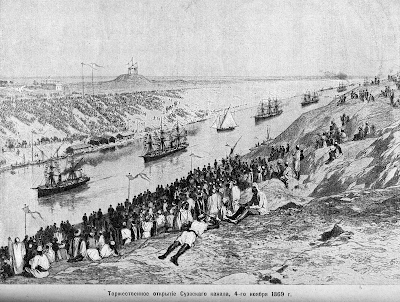
Panama Canal

The first pipeline was built in the US by Byron Benson in the US. The pipeline was 180 kilometer long:

"They had to surmount very significant and technical difficulties. First, no one had ever built a pipeline this wide. They proposed a 6-inch diameter of pipe. Second, they were building through the Allegheny Mountains which required going up and down very steep valleys and building in the total wilderness.", Britannica

This pipeline was build within one year from 1878 to 1879.

The construction of the Empire State Building is one of the most amazing success stories: With 443m height, it was the largest building in the world until 1971. The construction was done in 18 month from 1930 to 1931.
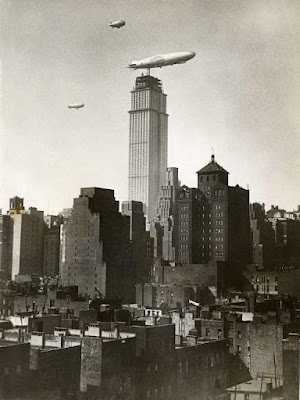
Empire State Building at construction time

The Manhattan Project in the 1940s managed to build a nuclear bomb — at a time when the scientific foundation of the field was not yet fully established — within three years. The Hoover Dam in the 1930's was finished in five years, the Golden Gate Bridge (built around the same time) in four. And it took the US eight years — from 1961 to 1969 — to put a man on the moon.
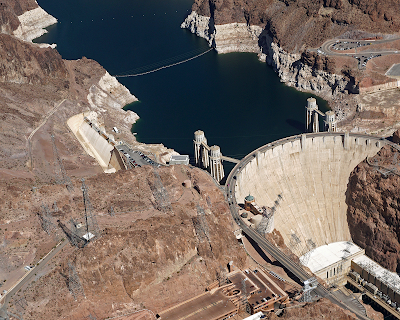
Hoover Dam

In Austria, the first Wiener Hochquellenleitung, the first Vienna Mountain Spring pipeline was built in the 19th century in four years. It had a length of about 100 km and the grand opening was done by Kaiser Franz Joseph I in 1873. The massive hydroelectric power plant, Kaprun, was built directly after the devastations of World War II, in eight years between 1947 and 1955. 
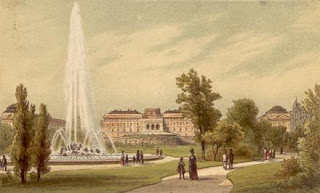
Fountain on Schwarzenbergplatz in 1873, where
Kaiser Franz Joseph celebrated the opening of the 
Vienna Mountain Spring Pipeline

And most impressively: during the 1970's, through the Messmer plan, France built 56 nuclear reactors within 15 years, many of which still deliver reliable and carbon-free electricity and are key to our energy survival this winter in Europe.
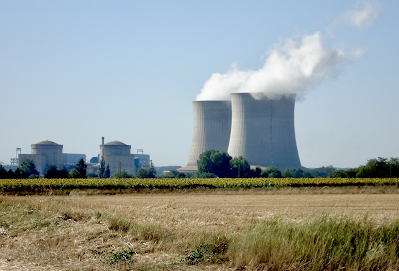
French Nuclear Power Plant

But surely we must be much faster today, given all the innovation we have achieved since?

China has indeed seen similar achievements more recently. The Three Gorges Dam was built in eight years, and the Hong Kong–Zhuhai–Macau Bridge, with a 55 km-length, the longest open-sea fixed link in the world, was built in nine years.
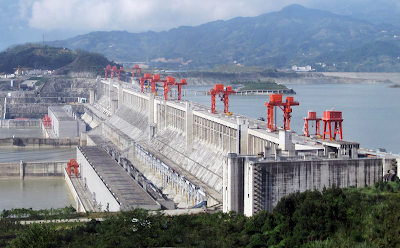
Three Gorges Dam

But when we look at the infrastructure and building projects of recent years in Europe and the US, the picture looks all but rosy. Just a handful of examples: the construction of Elbharmonie (a concert hall in Germany) took nine years to complete, and the cost exploded from €200 million to nearly €900 million. To put this into context: we needed the same time to build a concert hall, as our forefathers needed to build the Panama or Suez Canal. More importantly though, there are probably thousands of concert halls around the world to serve as precedence, whereas the Panama Canal was a construction unprecedented at the time.

Speaking of run-of-the-mill projects, take airports around the world: there are roughly 500 in France, Germany and the UK, 900 in Argentina, 14,000 in the US, even 17 in Antarctica. One would be forgiven for thinking we know how to build airports by now. And yet, the building of the Berlin airport took 14 years and created massive cost overruns. It is not even clear whether it can ever be operated economically. 

This is not only a German phenomenon: while we built the first mountain spring pipeline for Vienna of 100km length in the 19th century in four years, the Semmering-Basistunnel, a tunnel project in the mountains close to Vienna, with a length of 27km, is under construction since 2012 and is supposed to be finished in 2030, after 18 years of construction. When Finland undertook to extend one of its nuclear power plants, the Olkiluoto Block 3, the schedule and cost estimations were constantly overrun. Current estimates put its completion at this year (2022), after 17 years of construction. To put this into context: France built not one but 56 power plants in a shorter time.

In terms of energy supply we even seem to go backwards: opposed to the grand promises of “Energiewende”, Germany is burning more coal today than it did in the last years

Can these be dismissed as mere freak examples? A recent New York Times article suggests otherwise: 

  • The construction of the Honolulu rail transit with a length of 32 km started with an estimated cost of $125 million per km — $4 billion in total. And if this initial estimate in 2006 was not crazy enough for building a railway, the cost estimation now stands at more than $11 billion, with a planned completion by 2031. Should this estimation hold, it will have taken 25 years to finish a rail track of 32 km with a cost of  roughly $350 million per km.
  • In 2008, California started a high-speed railway construction to connect Los Angeles to San Francisco with  estimated costs of $33 billion. Construction was due to finish by 2020, in 12 years. Current estimates place the project completion in 2033 and the costs at $100 billion. 
  • The New York East Side Extension was planned to commence in 2006 and finish in 2011, with a budget of $2.2 billion. It now stands at $11 billion, with the completion estimated for December 2022.

Joseph Schofer, a Northwestern University civil engineer quoted in the article says »In the world of civic projects, the first budget is really just a down payment”, and Ronald N. Tutor, chief executive of Tutor Perini, a California firm that is building some of the nation’s largest projects, confirms that “All the major projects have cost and schedule issues”.

And as a last rather astounding example: in San Francisco the building of a public toilet was finally cancelled, after the planned toilet was estimated to cost $1.7 million.

Luckily the software world is all efficiency and innovation!

We could theorise that there is something particularly difficult about building infrastructure in the real world and that it becomes harder every day. But surely in the virtual world of software everything is fast, smooth and efficient, with one innovation overtaking the next. Or is it?

The term software crisis was coined in the 1960's and the situation has not improved since. Contrary to our perception that information and communication technology (ICT) is moving fast and reinventing itself all the time, this is not true behind the scenes. Just some examples for illustration. All of these issues are, on an engineering level, comparable to building the Golden Gate Bridge with such serious flaws that would cause it to collapse a year later: 

Not only do we suffer from a dramatic lack of quality in our ICT infrastructure,  but we are also facing enormous maintenance costs and a large number of failed IT projects. One of the largest failures in Europe in the last years (but by no means the only one) was the SAP transformation at Lidl which was terminated after €500 million were sunk in the project.

Such incidents occur frequently. The bottom line is: we do not seem to have our ICT systems or infrastructure projects under control, which leads to security issues, data breaches and — more to the point of this article — massive cost and schedule overruns within the IT projects, but also increasingly bleeding into other infrastructure projects.

Why this is of utmost importance

The capability to build essential infrastructure like railways, bridges or nuclear power plants quickly and in reasonable quality is fundamental for a modern society, especially one that is facing a number of severe challenges. Should we, for instance, have serious intentions to decarbonise our economy, we need one Messmer-plan-like nuclear build after the other. And that at least at the level of speed and quality that France delivered in the 1970's and 1980's. 

We have to move fast on multiple fronts: 

  • restructure our energy infrastructure
  • onshore manufacturing again 
  • de-globalise  supply chains to a certain degree
  • modernise agriculture by utilising biotechnology, vertical farming, etc. 
  • maintaining and rebuilding infrastructure that we have neglected for decades.

All these activities could be a net positive for our economies and environment, provided that they progress reasonably fast and efficiently.

While classic economic liberals and environmentalists usually do not have much in common, but many seem to share this idea, that we can quickly improve our situation through innovation, and the implementation of entirely unproven or speculative technology. One side might be thinking of machines that suck carbon out of the atmosphere and of creating economic growth by floating the market with innovations; the other of Rube Goldberg-like machines distributed over continents that allow wind and solar power to replace fossil fuels, and build a hydrogen economy along the way.

Both are betting on technology that is not yet available or entirely unproven. This bet is off the table, if our capabilities to innovate and even to build conventional infrastructure is not on par with expectations.

Contemplating  causes

While we huddle in teams, attend design-thinking workshops and run extensive stakeholder consultations to debate even the slightest risk that could in theory occur in any given undertaking, important progress and transformation in the outside world seem to be standing still, and real existential risk building up. Why is it, that we don't seem to be getting many important things done any more, at least not with reasonable efficiency?

I believe that there is — as in all complex problems — not a single cause, but a number of intertwined ones. I will try to outline some factors that I believe  to contribute substantially. Yet, please consider it not an exhaustive analysis , but rather a call for discussion. 

I would welcome any comments that agree or disagree with these observations. 

1 Digitisation Disappointment and General Stagnation in Research and Technology

I find it quite remarkable, even if this is not sufficiently discussed in public, that although digitisation was promised as a booster for productivity, the opposite seems to have happened. Several prominent experts have written and spoken about this phenomenon, among them Tyler Cowan, Robert Gordon, David Graeber, and Peter Thiel.

Robert Gordon remarks that productivity gains between 2004-2012 were on the lowest point since the end of the 19th century, which is remarkable, considering that this was the time when digitisation accelerated. 

Tyler Cowan writes:

“the low-hanging fruit has been mostly plucked, at least for the time being. […]  The Great Stagnation continues and indeed worsens, driven by an increasingly dysfunctional politics.”

Gordon's article and Cowan's book are both around ten years old, but not much seems to have changed since. The Covid pandemic and the current energy crisis only appear to have worsened the problem. Even before the crisis, other critics told the same story. Peter Thiel  in a conversation with Eric Weinstein in 2019 said:

“stagnation started in the late 1970s, with exception of digital technologies; even within Silicon Valley things seem to slow in the last 7 / 8 years” and “I don’t think the Truman show can go on for longer than a decade”

Until now the situation has not shown any signs of improvement. Even the anarchist activist and influential public intellectual David Graeber surprisingly seemed to agree with Peter Thiel's assessment, in his book Bullshit Jobs as well as in a discussion with Peter Thiel in 2020 (Where did the Future go?):

“the pace at which scientific revolutions and technological breakthroughs occur has slowed considerably since the heady pace the world came to be familiar with from roughly 1750 to 1950 […]  and in most wealthy countries, the younger generations can, for the first time in centuries, expect to lead less prosperous lives than their parents did.”

Finally, I would like to quote Nicholas Bloom, who describes the fast decline of scientific performance over the last decades:

“research effort is rising substantially while research productivity is declining sharply. […]  it takes around 13 years for research productivity to fall by half. Or put another way, the economy has to double its research efforts every 13 years just to maintain the same overall rate of economic growth.”

So, getting nothing done is also a phenomenon in science, albeit with a different spin. I assume that the stagnation we experience and described here is a contributing factor. I believe it is driven by two factors: (1) the low hanging fruit are plucked and new technology is much harder to come by and (2) we are experiencing a fast degeneration of research quality, hiring and promoting of scientists at universities due to bureaucratisation of research, massive flaws in science funding, and lack of critical exposure of scientists to the real world. 

“Academia has a tendency, when unchecked (from lack of skin in the game), to evolve into a ritualistic self-referential publishing game.”, Nassim Taleb

Sabine Kleinert and Richard Horton write in a Lancet commentary:

“There is clearly a strong feeling among many scientists, and not only Nobel Prize winners, that something has gone wrong with our system for assessing the quality of scientific research.”

This does not only lead to an increasing amount of irrelevant science and science of questionable quality, it also brings a massive overhead and waste of academic bureaucracy and funding infrastructure with it:

“European universities spend roughly 1.4 billion euros a year on failed grant applications—money that, obviously, might otherwise have been available to fund research. […]  I have suggested that one of the main reasons for technological stagnation over the last several decades is that scientists, too, have to spend so much of their time vying with one another to convince potential donors they already know what they are going to discover.”, David Graeber

2 Regulations, Bureaucracy and Focus Loss

It seems obvious that as a society we need to regulate certain technologies that can have dangerous effects, and harm the environment, economy or society. But over the decades, regulation and red tape have become more and more extensive with increasingly dubious results. Regulating complex topics is very hard, and rarely done well. Gerd Gigerenzer provides examples of financial regulations to illustrate this point:  

  • Basel 1 (1988): 30 pages, calculations could be done with “pen and paper”; 18 pages primary law in the US — was allegedly too simple
  • Basel 2 (1996): more than 300 pages (did not stop the financial crisis of 2008)
  • Basel 3 (2009): more than 600 pages; more than 1.000 pages primary law in the US; consequences of these regulations are hard to understand and require specialised firms

The idea that complex problems need overly complicated regulations seems to be a fundamentally flawed one. More and more complicated regulatory frameworks help large market players and keep startups out of the market, they also allow experts to find esoteric holes that can be exploited and are counter to the original intentions. Far from making things safer, they often make things more complex and less safe, slowing down progress dramatically.

“Indeed much of the work of investment banks in my day was to play on regulations, find loopholes in the laws. And, counter-intuitively, the easier it was to make money.”, Nassim Taleb, Skin in the Game

Marc Andreessen also talks about stifling stagnation and describes this phenomenon with the example of two major political projects of Richard Nixon's:  One was the creation of the Environmental Protection Agency (EPA) to regulate the environmental impact of corporations, and the other was Project Independence — the Nixon-era nuclear roll-out programme. Analysis showed back then what we also know today, that nuclear energy is the cleanest, safest and best technology for producing energy. Based on this, 1,000 reactors were supposed to be built until the year 2000 in the US. That did not happen. “We got the regulation and stagnation but not the reactors.” Andreessen concludes.

David Graeber describes in The Utopia of Rules stagnation in our society and progress, but also a more unexpected consequence — computers became amplifiers of bureaucracy:

“The Internet is surely a remarkable thing. Still, if a fifties sci-fi fan were to appear in the present and ask what the most dramatic technological achievement of the intervening sixty years had been, it's hard to imagine the reaction would have been anything but bitter disappointment.  […] 

Computers have played a crucial role in all of this. Just as the invention of new forms of industrial automation in the eighteenth and nineteenth centuries had the paradoxical effect of turning more and more of the world's population into full-time industrial workers, so has all the software designed to save us from administrative responsibilities in recent decades ultimately turned us all into part or full-time administrators.”

And finally Graeber writes in Bullshit Jobs:

“The most miserable thing about box-ticking jobs is that the employee is usually aware that not only does the box-ticking exercise do nothing toward accomplishing its ostensible purpose, it actually undermines it, since it diverts time and resources away from the purpose itself.”
and maybe very important for the considerations here:
“much of the reason for the expansion of the bullshit sector more generally, is a direct result of the desire to quantify the unquantifiable. To put it bluntly, automation makes certain tasks more efficient, but at the same time, it makes other tasks less efficient.”

So, did we use computers to automate the wrong things? To maximise distraction, support unnecessary bureaucracy while at the same time harming our capability to get things done?

3 Fear-driven Management and Juridification of Society

All this goes hand in hand with what I call the rise of fear or liability-driven management, which blossomed with the steady rise of the managerial / administrative class. In my experience there is often a substantial difference in decision making between founders/entrepreneurs and professional managers. The first group is deeply invested in their company, by definition holds in-depth knowledge (otherwise the company would not have survived) and makes active decisions, that is with mid- and long term prospects of the company in mind, driven by facts, taking risk. 

The managerial class on the other hand, more often than not, has a different priority: themselves. The question of management is reframed from: what is best for the company to how do I survive the next years while maintaining this salary and this position (or higher). As a consequence, decision making tends to be passive, risk-averse (as far as their own risk is concerned). This leads to an over-reliance on legal and professional consulting, which not only costs a lot of money but more importantly throws a spanner in the works.

“The final victory over the Soviet Union did not really lead to the domination of the market: More than anything, it simply cemented the dominance of fundamentally conservative managerial elites-corporate bureaucrats who use the pretext of short-term, competitive, bottom-line thinking to squelch anything likely to have revolutionary implications of any kind.”, David Graeber

Hand in hand with this trend of defensive and risk-avoiding decision making goes a juridification of society. As mentioned above, regulations get more and more complicated, old rules are hardly removed but new one are constantly added. As the Austrian lawyer Lukas Feiler explains in a talk:

“The interesting puzzle really is, how did we end up with such a complex legal landscape, when we all agree that it is simplicity what we would need. […] Moreover, politicians act on problems of the past. […] It is, as if politicians are driving a large truck by only looking into the rear mirror.”

So it seems, not only are we making our legal system unnecessarily complex, we also react to problems of the past, slowing progress down, while overlooking the actual risks of the future.

4 Specific Loss of Capability to Build Large Projects

And finally, after the more abstract considerations, we have witnessed a de-industrialisation of Western nations, which has even been lauded by pundits of different political affiliations. Market liberals saw it as an efficiency measure, and environmentalists were happy to get rid of heavy industry. The former did not consider that short-sighted efficiency measures had to be paid back with high interest rates in the future. The latter overlooked that we merely exported our polluting industry to other nations and more importantly, our know-how with it. If we don't maintain and build certain industries any longer, if we do not train new engineers, we will lose the capability to build related large projects.

The good news is that many of the successful and fast projects from the past were built without a lot of prior knowledge. So, with enough determination, there should be no reason why it should not be possible to quickly rebuild this capacity again.

As far as ICT is involved, we got entangled in a complexity trap. Over time, we improved our skills to make software, but we did not use these skills to build software better, but to constantly build more complex software that actually overburdened us. This is a serious problem, because software is the digital nervous system of our society and also of modern infrastructure. Having lost control over large parts of this digital infrastructure must have harmed large infrastructure projects in one way or another.

What next?

Firstly, I would like to test, debate and discuss the observations made in this article and would welcome your comments. Secondly, the fact that we experienced these achievements in the past shows that we are capable of building large infrastructure fast and reliably. We might have lost that now but a better understanding of the reasons could bring us back to where we were. This is the good news. The bad new is, if the Western world will not do it, other nations will, to our disadvantage. So as a next step, more concrete ideas have to be developed on how to improve the situation. I think solutions will have to consider the following aspects:

  • Ensure that managers and politicians have skin in the game
  • Reward risk taking to a certain degree, not defensive decision making
  • Decidedly remove unhelpful bureaucracy and red tape
  • Rethink science funding fundamentally
  • Aim for generic and simple, not complex and specific legislation (or rules in general, this also applies to corporate processes and the like)
  • Allow failure, iterate, while paying attention. Keep going and adjust with new learnings

Final Remarks and Possible Objections

One possible objection to this article could be that I am cherry picking examples. The examples I have found seem to be too common to dismiss as exceptions to the rule. The New York times article also points to the same findings. But if you believe otherwise I would be interested in receiving your comments. 

One could also criticise that the historic projects are not really comparable to modern ones, given that the working conditions during the construction of, for example, the Panama or Suez canal 100 or 150 years ago were certainly not up to modern labour-standards. Yet, even with complying with modern labour standards, shouldn't we be easily able to compensate the potentially slower progress of non-exploitative methods of working with supposedly vastly superior technology, equipment and computers?

It is also important to note one constraint in my selection of examples: I explicitly did not choose examples of modern undertakings that are especially innovative or have not been achieved so far (though hyped by some and dismissed by others), for example uploading the brain into the computer, colonising Mars, nuclear fusion power plants or the like. One could easily argue that these types of projects are inherently much harder than building a canal or a dam. 

In this article I am referring only to construction scenarios that we have done repeatedly in the past like dams, railway lines, bridges, opera houses and even nuclear power plants. For context, globally about 450 nuclear power plants are in operation today, and even more were built in the past or still under construction. So I chose infrastructure projects that are the opposite of new, and existing everywhere around us already.

One last note: The projects I have highlighted in this article were not selected because they are necessarily useful or ethical, but only for their engineering and management prowess.

Zum Abschluss...

Es freut mich, dass Sie sich die Zeit genommen haben, mein Blog zu lesen. Natürlich sind viele Dinge, die ich hier diskutiere aus einem subjektiven Blickwinkel geschrieben. Vielleicht teilen Sie einige Ansichten auch nicht: Es würde mich jedenfalls freuen, Kommentare zu lesen...

Noch ein Zitat zum Schluß:

"Ich verhielt mich so, als wartete ein Heer von Zwergen nur darauf, meine Einsicht in das Tagesproblem, zur Urteilsfindung von Gesellschaft und Politik zu übersetzen. Und nun stellt sich heraus: Dieses Heer gibt es nicht.

Ganz im Gegenteil erweist sich das kulturelle Getriebe als selbstimmunisierend gegen Kritik und Widerlegung. Es ist dem Lernen feind und wehrt sich in kollektiver Geschlossenheit gegen Umdeutung und Innovation.", Rupert Riedl, Evolution und Erkenntnis, Piper (1985)

:-)